
IRT Jules Verne, R&D Partner to the Energy Industry
IRT Jules Verne supports the energy industry across three main areas: nuclear energy, wind energy and wind-assisted ship propulsion. Its partnership with EDF now forms the cornerstone of this activity. Since the FETCH project, launched in 2021 to support the decommissioning of the Brennilis nuclear power plant, the collaboration has steadily developed, with EDF becoming a member in 2023 and joining the Institute’s Board of Directors in 2024.
This presence is reinforced by IRT Jules Verne’s involvement in the sector’s major networks. A member of the Nuclear Valley competitiveness cluster since 2022, the Institute co-chairs its Robotics Committee.
Its work in offshore wind is carried out within the Alliance Éolien, alongside fellow IRT and ITE organisations b<>com, France Energies Marines and SuperGrid Institute.
The energy industry faces a wide range of demanding industrial challenges:
– ensuring the safety and reliability of operations on complex facilities;
– ensuring sovereignty, environmental performance and the circularity of equipment;
– strengthening the competitiveness of rapidly developing wind energy and wind-assisted propulsion industries;
all within life cycles that can sometimes span several decades.
To address these challenges, IRT Jules Verne draws on its expertise to support a wide range of activities, from the construction of new nuclear power plants and nuclear decommissioning to the manufacture of recyclable wind turbine blades and offshore wind floaters, as well as the development of the wind-assisted propulsion industry.
- Nuclear Energy: supporting fleet renewal and addressing industrialisation challenges
- Wind Energy: combining industrial performance and the circular economy
- Wind-Assisted Propulsion: establishing International industry standards
Nuclear fleet renewal: major industrialisation challenges
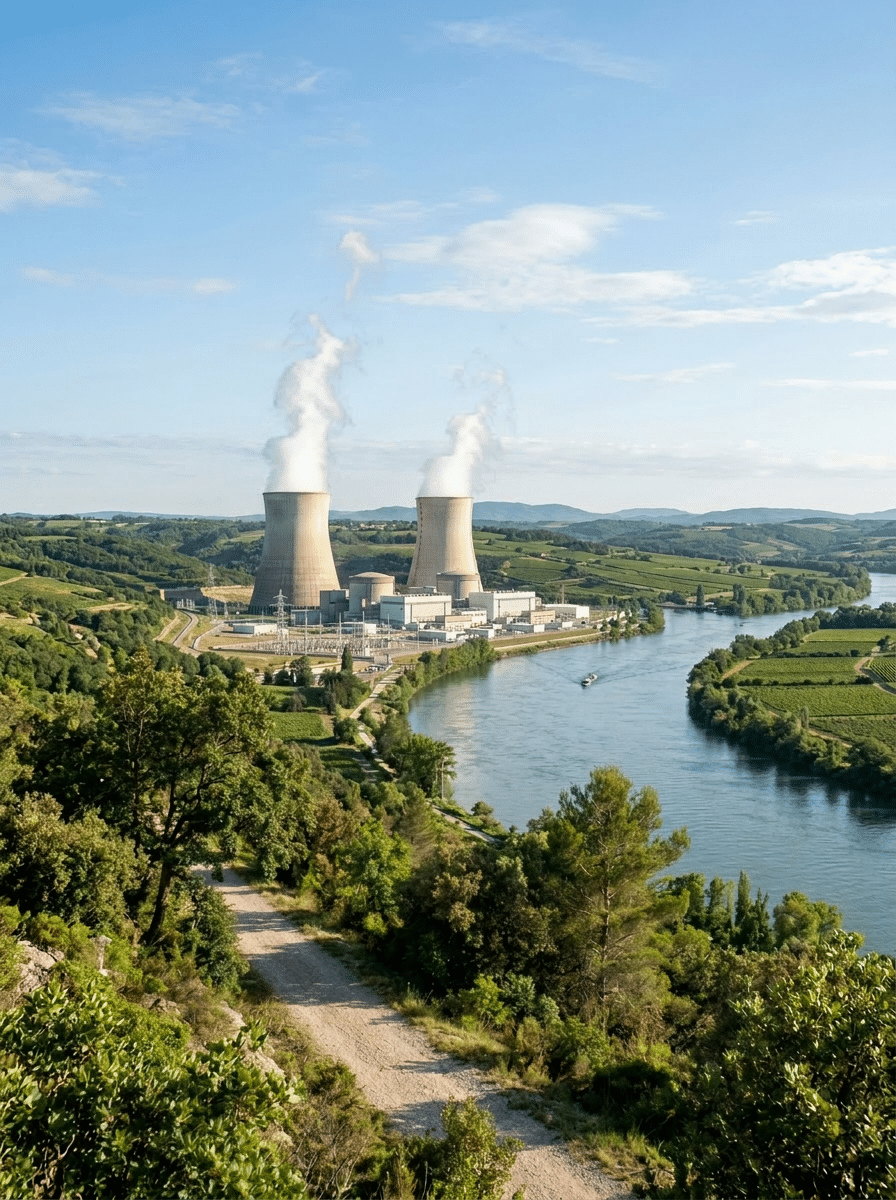
The French nuclear industry faces a dual challenge: extending the lifetime of the existing nuclear fleet while preparing for its renewal. The construction of new EPR2 reactors and the development of SMRs are opening a new industrial phase, with major challenges in terms of cost and schedule control, quality, safety and reliability.
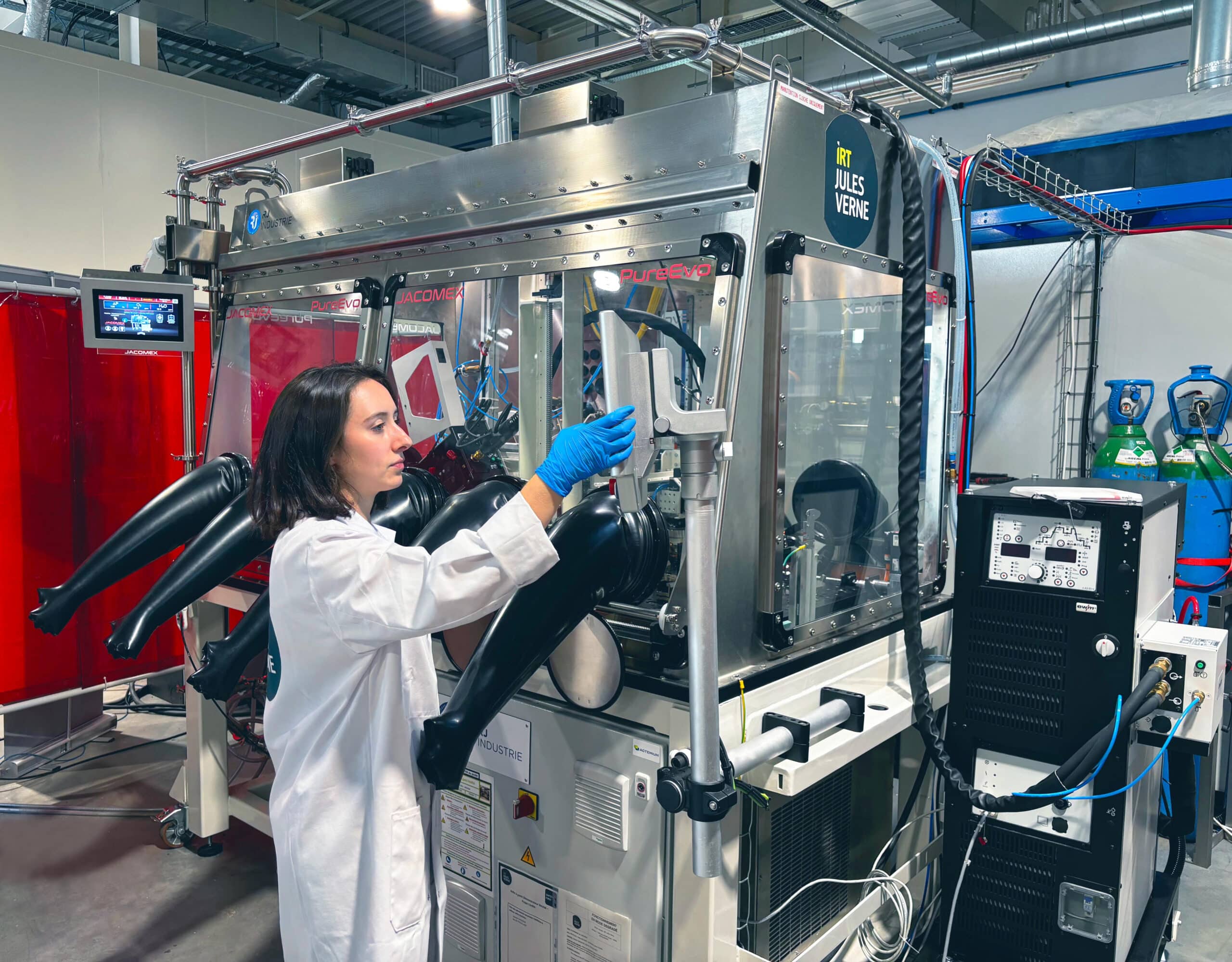
In this context, IRT Jules Verne draws on its expertise in robotics, automation, process simulation and non-destructive testing to support companies across the nuclear industry. This expertise can address challenges related to the construction of new reactors, the maintenance of the existing nuclear fleet and decommissioning operations.
It was in this field that the FETCH project was launched in 2021 with EDF, DP2D and Graphitech, with the aim of automating the extraction of the 216 pressure tubes from the reactor vessel at the Brennilis nuclear power plant, which is currently being decommissioned. A robot incorporating the optimal extraction scenario for each tube, depending on its location, demonstrated the industrial feasibility of this complex operation.
This success paved the way for broader collaboration with Graphitech, a joint venture between Cyclife (EDF Group) and Veolia, which is preparing for the decommissioning of graphite-moderated gas-cooled nuclear reactors (UNGG) at EDF’s Industrial Demonstrator near the Chinon nuclear power plant. IRT Jules Verne notably worked on defining lighting parameters for tube detection, followed by the development of a dual-camera redundancy system to ensure continuous vision in the event of a camera failure.
This robotics expertise is now being applied more broadly across the nuclear industry. IRT Jules Verne also works with Framatome and Orano on the automation of welding processes, process simulation and automated non-destructive testing—three key areas supporting the industrial performance of the French nuclear industry.
Wind Energy: combining industrial performance and the circular economy, from blades to offshore floaters
Wind energy plays an important role in the energy transition, but managing wind turbine blades at the end of their service life remains a major challenge. While nearly 90% of a wind turbine’s total mass can currently be recycled through existing recycling streams, blades remain much more difficult to recover and recycle due to the composite materials they are made from.
Driven by the rapid growth of offshore wind energy, this challenge is becoming increasingly significant from an industrial perspective. France’s Multiannual Energy Programme now targets 15 GW of installed capacity by 2035, 18 GW by 2037 and 45 GW in operation by 2050.
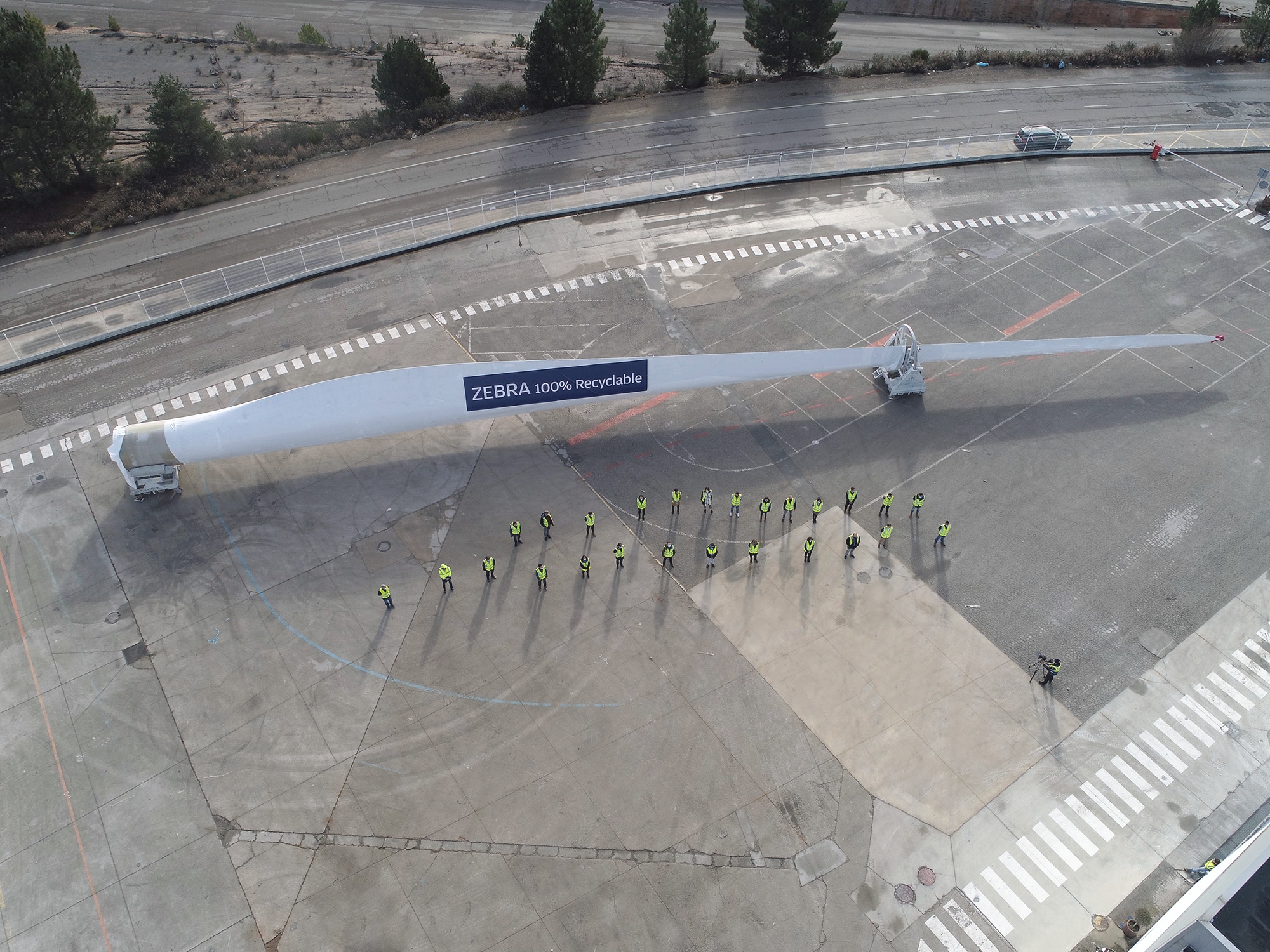
Led by IRT Jules Verne since 2020 in partnership with Arkema, CANOE, ENGIE, LM Wind Power, Owens Corning and SUEZ, the ZEBRA project (Zero wastE Blade ReseArch) developed the world’s first 100% recyclable wind turbine blade. With a budget of €18.5 million over 42 months, the consortium manufactured and tested two full-scale blades, measuring 62 and 77 metres, combining Arkema’s Elium® thermoplastic resin, a recycling-compatible Bostik adhesive and Owens Corning’s Ultrablade® glass fabrics.
The thermolysis process developed to recover the Elium® monomer achieved a yield of over 75%, enabling the production of a blade incorporating a major structural component made from recycled resin. Overall, closed-loop recycling reduces CO₂-equivalent emissions by up to 30% per blade, a performance validated by a panel of four independent experts through a life cycle assessment conducted in accordance with ISO standards.
Beyond wind turbine blades, IRT Jules Verne is also working on the industrialisation challenges associated with floating offshore wind platforms.
As part of the RECIF project, conducted with SAIPEM, SERIMAX and Vallourec, IRT Jules Verne is contributing to the development of innovative welded and non-welded assembly solutions for steel semi-submersible floating platforms. The objective is to reduce assembly lead times and industrialisation costs while improving manufacturing quality and productivity.
IRT Jules Verne is further extending its commitment to offshore wind through the Alliance Éolien, founded with b<>com, France Energies Marines and SuperGrid Institute. Within the alliance, the Institute draws on its expertise in manufacturing processes and the recyclability of large-scale components, notably through an offshore wind digitalisation project conducted with France Energies Marines.
Wind-Assisted Propulsion: establishing international industry standards
Maritime transport accounts for more than 80% of global trade and nearly 3% of global greenhouse gas emissions. Wind-assisted propulsion, which uses wind energy directly to propel ships or assist their propulsion, is emerging as a breakthrough solution for decarbonising the sector, without requiring new energy infrastructure.
Since 2023, IRT Jules Verne, alongside the Wind Ship association, has been leading efforts to structure this emerging sector. Following an initial feasibility study involving 32 maritime transport stakeholders, the Institute launched the VENFFRAIS II project in late 2025. With a budget of €15.2 million over five years, the project brings together 23 partners from across the French value chain: shipowners, equipment manufacturers, naval architects, shipyards, engineering firms, testing centres, academic partners and classification societies.
Among them are CMA CGM, Chantiers de l’Atlantique, PONANT, Louis Dreyfus Armateurs, Neoline, Bureau Veritas Marine & Offshore and Centrale Nantes.
Scientific coordination is led by Mauric.
Its objective is to provide the industry with reference methods and tools for measuring, comparing and certifying the performance of wind propulsion systems. To achieve this, the project combines numerical modelling, experimental testing and measurements under real operating conditions, with the ambition of developing a reference methodology and international standards for measuring wind propulsion performance.
The initial feasibility study estimated that the sector could generate up to 4,600 direct jobs in France by 2030, compared with 550 today.
Independently of this programme, IRT Jules Verne can already build on a first tangible industrial success in wind-assisted propulsion: its automated lay-up technology enabled SMAF, a subsidiary of Chantiers de l’Atlantique, to market its first machine for manufacturing composite masts for Solid Sail technology.
An ecosystem bringing together Nuclear Energy, Wind Energy and Wind-Assisted Propulsion
IRT Jules Verne draws on an ecosystem of industrial, academic and institutional partners spanning the three main areas of the energy industry.
In the nuclear sector, the partnership with EDF forms the cornerstone of this presence, alongside collaborations with Framatome, Orano and Graphitech. A member of the Nuclear Valley competitiveness cluster since 2022, IRT Jules Verne also co-chairs its robotics working group alongside Robotics Valley.
In offshore wind, IRT Jules Verne is active within the Alliance Éolien, alongside b<>com, France Energies Marines and SuperGrid Institute. In wind-assisted propulsion, it works notably with the Wind Ship association.
This ecosystem also brings together academic partners, including Nantes Université and CNRS, as well as the EMC2 industrial competitiveness cluster.
-
Major industrial companies
EDF · FRAMATOME · ORANO
-
SME
GRAPHITECH
-
Competitiveness clusters
NUCLEAR VALLEY · ROBOTICS VALLEY · POLE EMC2
-
IRT & ITE
B<>COM · FRANCE ENERGIES MARINE · SUPERGRID INSTITUTE
-
Associations
WIND SHIP
-
Academic teams
NANTES UNIVERSITÉ · CNRS
Our key industry members in the Energy Sector
EDF · FRAMATOME
These industrial partners make a long-term commitment to co-develop IRT Jules Verne’s technology and programme roadmap, in line with the sector’s key priorities. By becoming a member of IRT Jules Verne, you gain access to strategic opportunities that create tangible value for your organisation.