
France 2030 collaborative R&D projects led by IRT Jules Verne
The France 2030 projects led by IRT Jules Verne are at the heart of France’s industrial transformation: they bring about tangible improvements to manufacturing processes in sectors such as aerospace, shipbuilding, defence and energy. Based in Nantes since 2012, the institute has been developing the building blocks of its technological and programmatic roadmap in the field of manufacturing to address the strategic challenges of the industry of the future.
The institute includes, within the consortia for its R&D projects, stakeholders representing the entire industrial chain, notably system integrators who facilitate the technology transfer of the solutions developed. In collaboration with its network of industrial and academic partners, IRT Jules Verne has thus launched nearly 150 France 2030 projects with a budget of nearly €300 million, of which €120 million is public funding.
- IRT Jules Verne sets up collaborative R&D projects to accelerate technological innovation and its transfer to manufacturing plants, and to support the transformation of French industry.
- With the support of public funding from the France 2030 programme, IRT Jules Verne pools the financial resources of industrial partners to overcome common technological barriers.
- With IRT Jules Verne, benefit from a multi-partner ecosystem bringing together major industrial clients, SMEs, system integrators, academic laboratories and manufacturing experts
- The institute guarantees a structured methodology, from the analysis of industrial needs through to project management and implementation
- Nearly 150 collaborative R&D projects launched since 2012, with a budget of nearly €300 million
Why get involved in a France 2030 project with IRT Jules Verne?
Taking part in a France 2030 collaborative project with IRT Jules Verne means:
- Accelerating technological innovation within your organisation
- Benefiting from leverage through favourable public funding
- Having a single point of contact with multi-disciplinary expertise in manufacturing, who coordinates the project
- Gaining access to a shared ecosystem of industrial and academic stakeholders
- Contributing to the development of sovereign, sustainable and competitive industrial solutions that underpin strategic sectors for France
- Being part of a collective working on multi-sector, multi-partner projects
France 2030 projects by IRT Jules Verne
Involving multiple partners and focused on the practical needs of the markets, these collaborative R&D projects contribute directly to the sovereignty, competitiveness and resilience of French industrial companies. They are underpinned by the France 2030 plan led by the General Secretariat for Investment (€54 billion over five years), the aim of which is, in particular, to help France catch up in certain industrial sectors of strategic importance to the country.
The France 2030 projects are based on a unique model of cooperation that brings together major industrial groups, innovative SMEs, system integrators, academic research laboratories and manufacturing experts from the IRT Jules Verne.
To achieve innovations that can be scaled up for industrial production, every stakeholder in the value chain plays a role and contributes their expertise within a collaborative framework that encourages cross-fertilisation.
4 Key Features
-
01
Duration
3 to 4 years
-
02
Collaboration
Multi-partner, multi-sector, multi-disciplinary
-
03
Funding
Between 35 and 40 per cent public funding + Research Tax Credit
-
04
Expected outcomes
Representative demonstrators with a focus on technology transfer
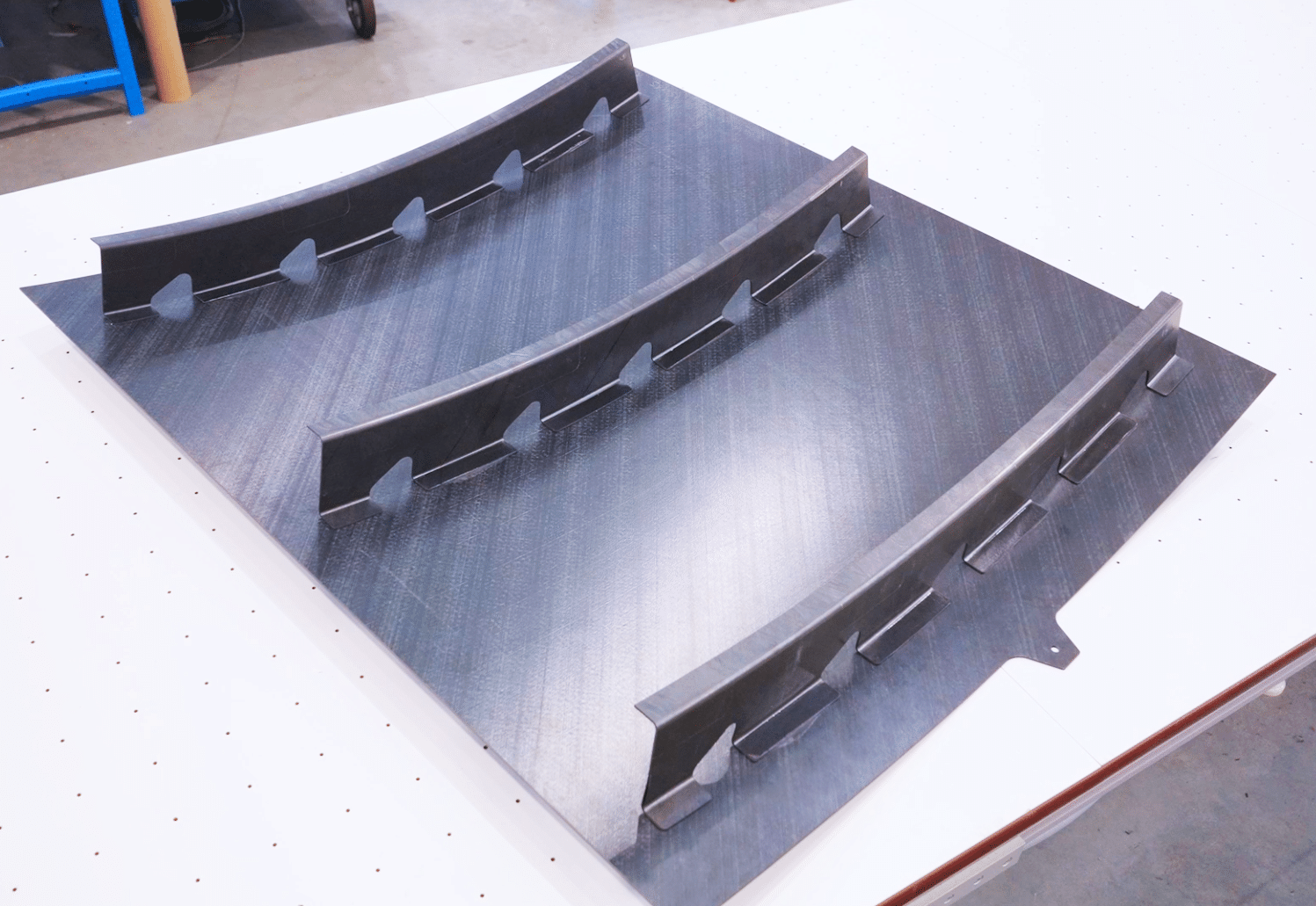
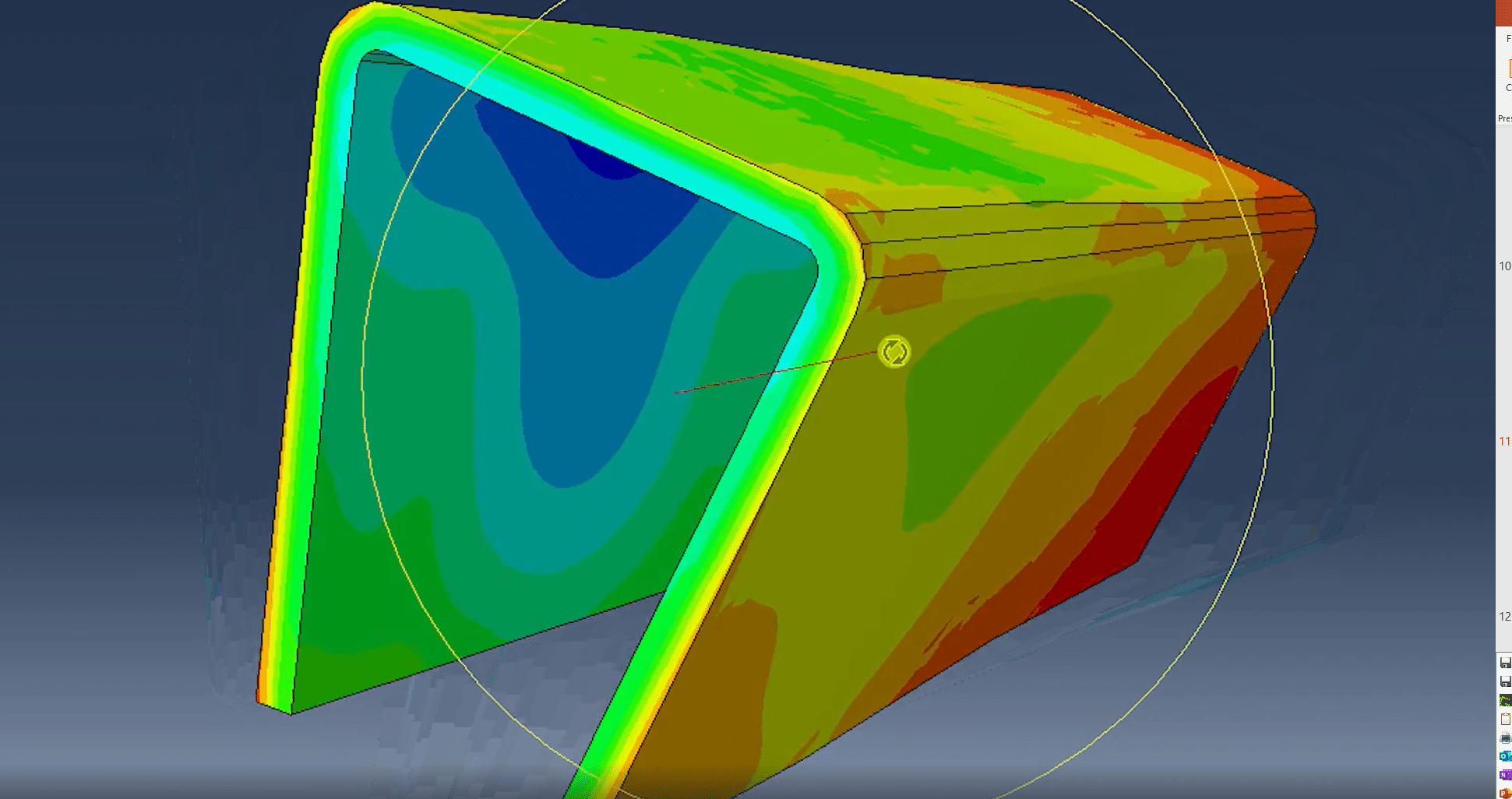 MATCH Project
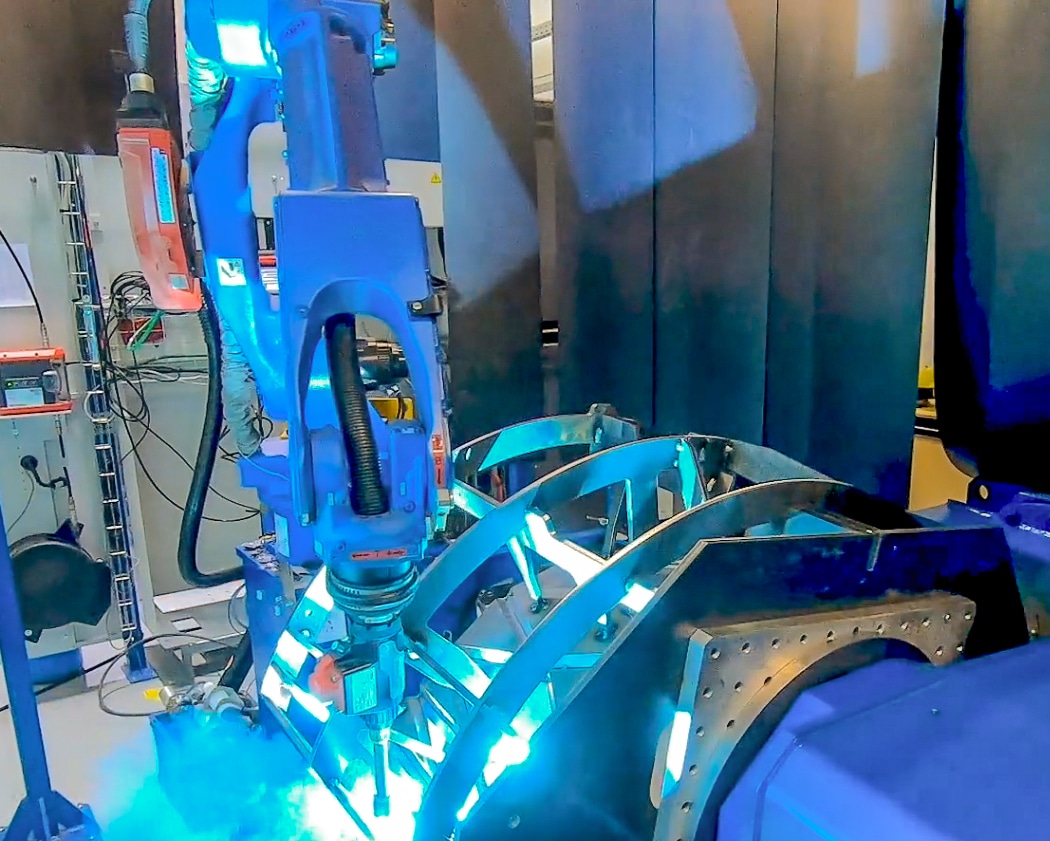
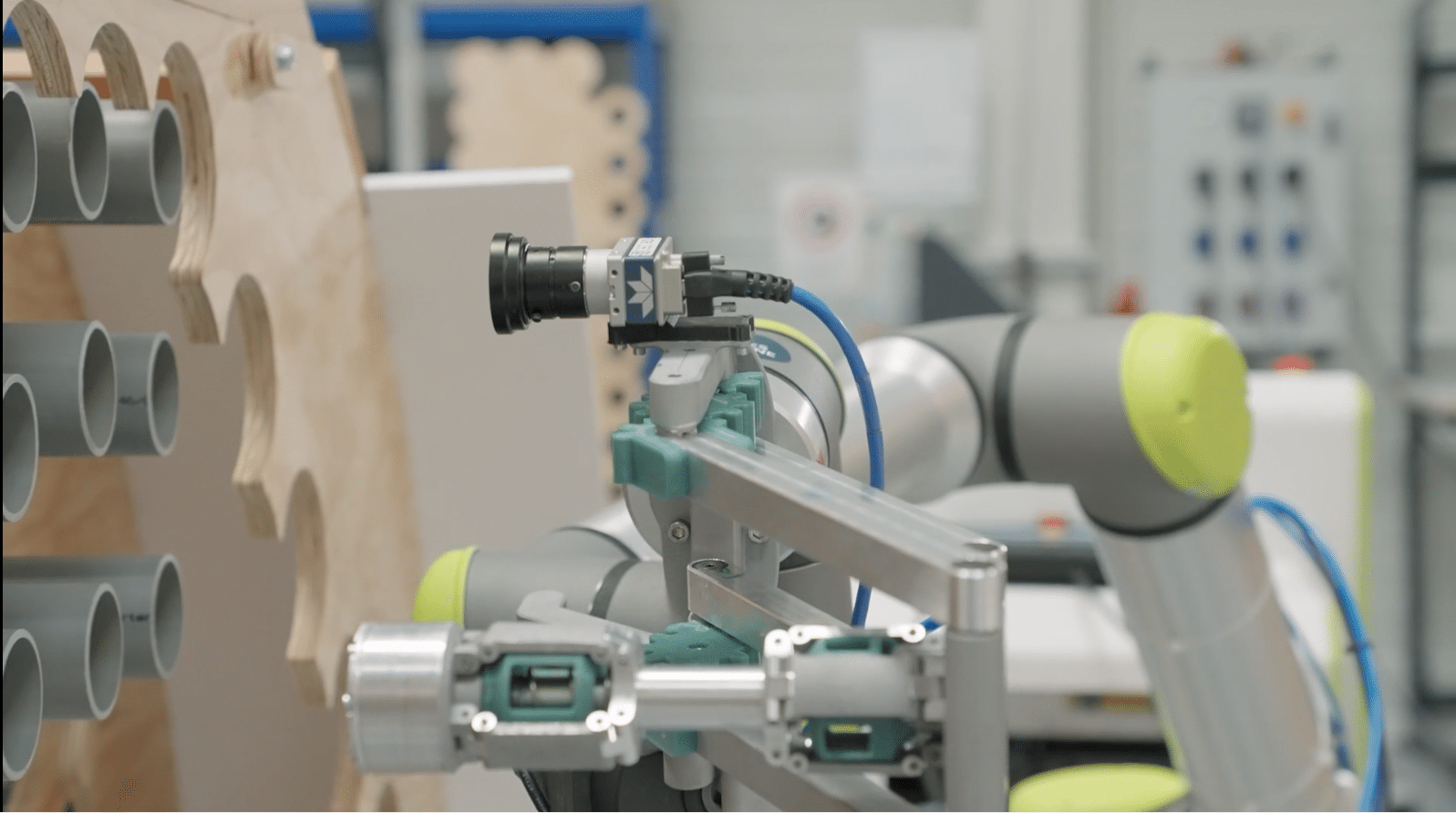 FETCH Project
 SPECTRA Project
 ARWEN Project
Our methodology, from industrial needs to the launch of an ambitious and structured collaborative project
- 01 Analysis of industrial needs At the heart of the challenges facing France’s major industrial sectors, IRT Jules Verne gathers and analyses manufacturers’ needs in the field of manufacturing. The aim is to highlight priority issues, identify any problems common to different sectors, and pinpoint the resulting opportunities for collaborative innovation.
- 02 Identification of technological bottlenecks Together with its partners, IRT Jules Verne identifies the technological challenges arising from the expressed industrial needs. These scientific barriers may span multiple sectors and draw upon one or more of the five areas of manufacturing expertise integrated within IRT Jules Verne.
- 03 Development of the technical programme The technical programme for the R&D project is then structured around the previously identified objectives and barriers: the research work, deliverables and expected scientific results are defined, quantified and planned.
- 04 Formation of the consortium IRT Jules Verne brings together different types of industrial innovation stakeholders in consortia that are, by their very nature, multi-partner and, where relevant, multi-sector. R&D project consortia include industrial clients, system integrators, capital goods manufacturers or materials suppliers, academic partners, and so on.
- 05 Project set-up and funding With genuine expertise in setting up and managing innovation projects, the institute establishes the operational, administrative, legal and financial framework for collaborative R&D projects and mobilises funding schemes (France 2030).
- 06 Project management and implementation The R&D project is managed by a complementary duo comprising a project manager and a technical lead.
Robust project management, built for the long term
With nearly 150 collaborative R&D projects to its credit, the institute has developed expertise in managing complex, multi-partner innovation projects. Our team of project managers ensures agile management and rigorous monitoring to guarantee that the objectives of our France 2030 projects are met.
Our cornerstones:
- 01 Quality and adherence to budgets and deadlines
- 02 Agile management, enabling the integration of new partners during the project, technical reorientation or budgetary adjustments
- 03 Close oversight: steering committee, technical committee
- 04 Handling of administrative tasks: reporting to the ANR, procurement, CIR reporting, etc.
5 areas of expertise deployed across France 2030 projects
Metallic
Metal welding & additive manufacturing
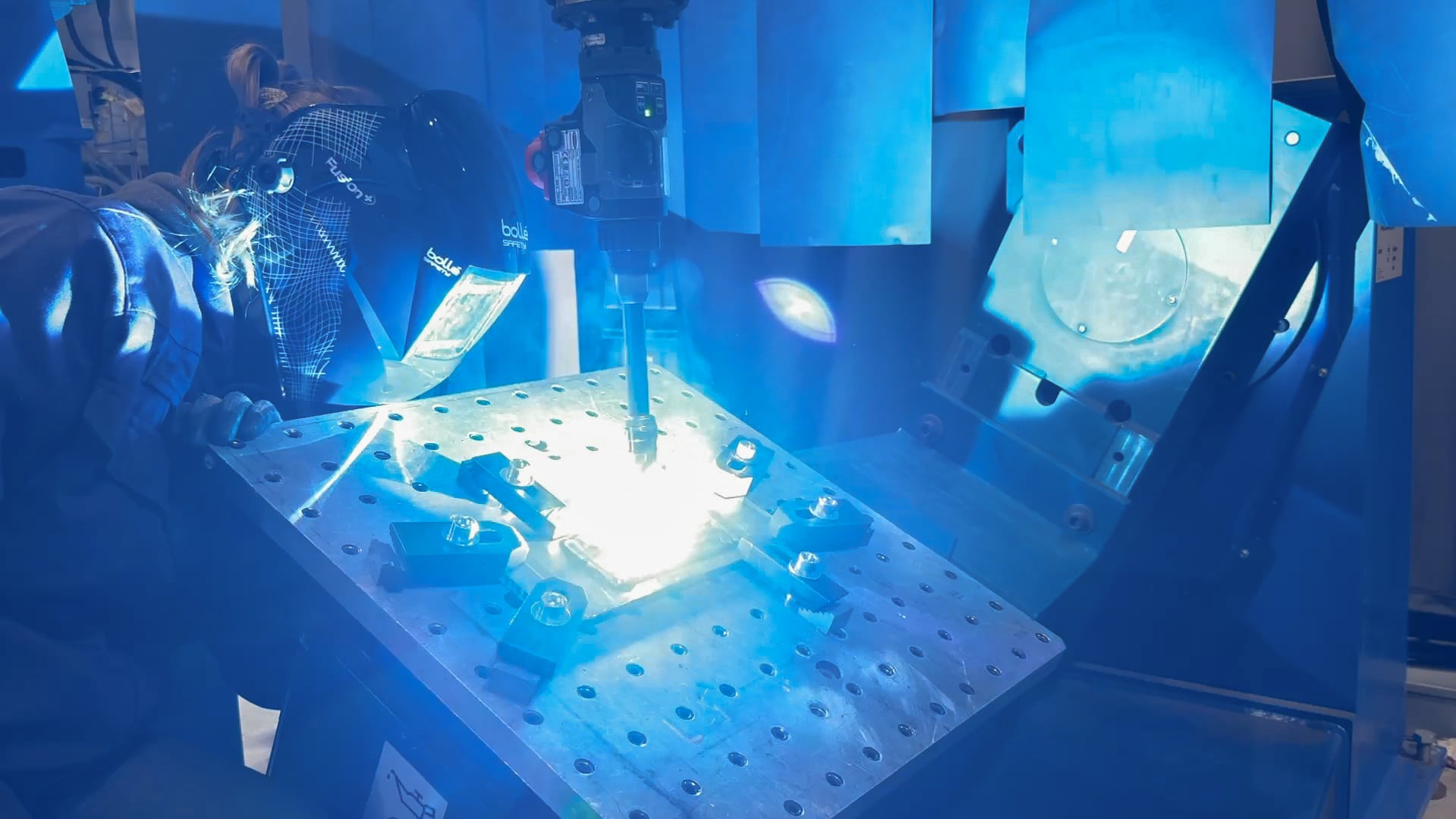
Innovative metal processes are one of the pillars of the technological research carried out at the IRT Jules Verne (Nantes) since 2012. The objective is twofold: to industrialize additive manufacturing technologies (DED-fil and AFSD) and to automate welding assembly (Arc and FSW) by improving productivity and quality.
Supervised by Grégoire Bazin, our technological research team is made up of about fifteen R&D engineers, experts, technicians and PhD students. It develops innovations for metal manufacturing processes based on additive manufacturing and metal welding technologies in liquid and solid state.
The team relies on know-how in metal processes and materials and on state-of-the-art equipment that differentiates it. It works in synergy with the other research teams of the IRT Jules Verne in order to offer global support.
- Automated Metal Welding Assembly
- Large-Scale Metal Additive Manufacturing Using DED Wire (Liquid State)
- AFSD Large-Scale Metal Additive Manufacturing (Solid-State)
- Repair and Reloading
Composites
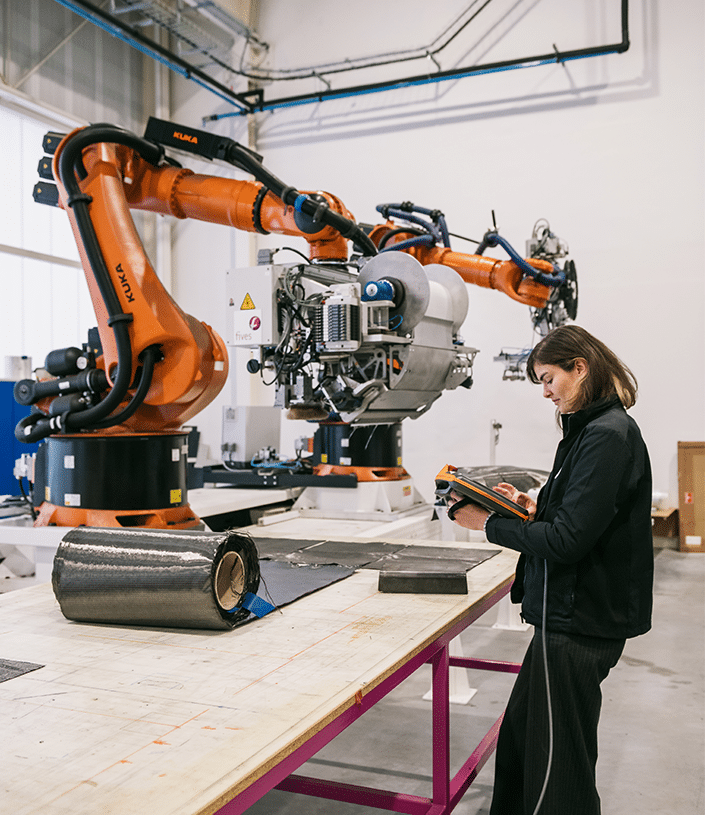
Based near Nantes, the IRT Jules Verne has, since its creation in 2012, developed outstanding expertise in the manufacturing processes for composite parts and structures.
As the core activity that led to its creation, the institute’s expertise in composite materials processes is now recognised at both national and European levels. IRT Jules Verne is also recognised as a key player in the field within international networks, notably JEC World, which has on several occasions recognised the groundbreaking technological innovations developed at the institute.
With a multi-sector technological research team dedicated to composite materials and processes, IRT Jules Verne leads collaborative national and European R&D projects and provides R&D services to address industrial performance challenges, particularly those relating to the manufacture of complex and large-scale structures.
The R&D activities combine the development of innovative processes with product design in order to optimise production costs, meet production rate targets and reduce environmental impact. They cover thermoplastic and thermosetting composite materials, from preforming and shaping through to assembly.
Linking up with IRT Jules Verne’s expertise in modelling and simulation, robotics and process monitoring, the team develops comprehensive solutions, from technical and economic feasibility studies through to full-scale industrial demonstrators.
- Large-scale automated preforming
- Liquid impregnation processes: thick infusion, RTM injection and isothermal CRTM
- Forming processes: thermocompression, stamping/overmolding and non-autoclave consolidation
- Welding of TP composites
Modelling & Simulation
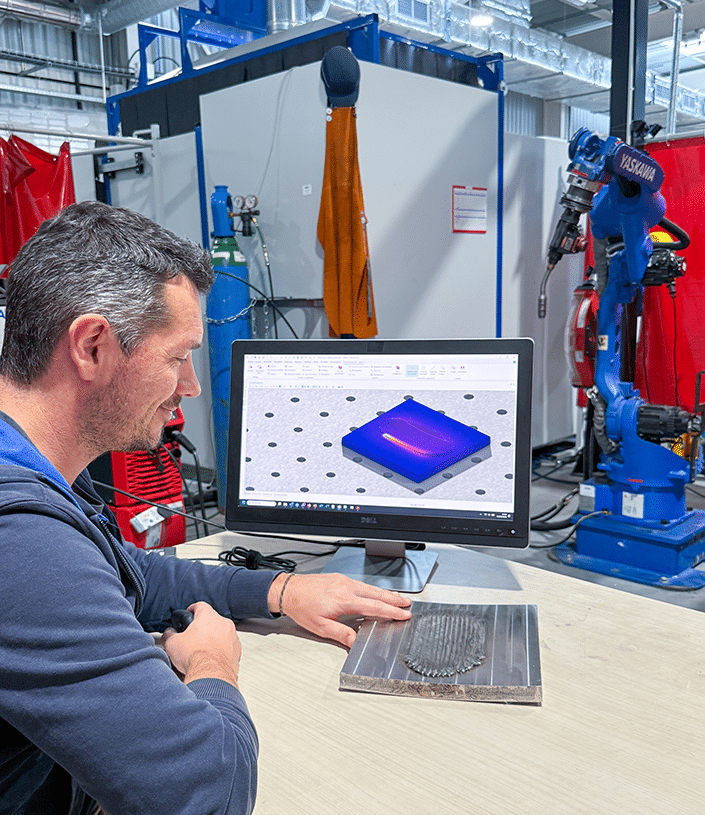
To enhance the competitiveness of the industrial sector, IRT Jules Verne relies on modeling and numerical simulation of manufacturing processes to address the major challenges facing French industry. Based in Nantes since 2012, the Modelling and Simulation team studies the behavior of structures and manufacturing processes and works on the shaping and assembly of materials. It uses and develops digital tools for its R&D projects and services to size, predict, optimize, and understand.
The objective is clear: to provide reliable data to manufacturers to facilitate decision-making and reduce the time and cost of development.
Led by Stéphanie Colliou, the team consists of 18 R&D engineers, experts, and doctoral students. It has a strong digital culture and is proficient in a wide range of simulation software. Working in collaboration with the institute’s other technological expertise areas, the simulation and modeling work is validated through testing. The team relies on a network of partners to characterize materials and feed data into the models.
- Simulation and optimisation of composite processes
- Simulation and optimisation of metallic processes
- Digital twin of the process
- Assembly and tolerancing
- Thermal management of processes
Monitoring & process control
Develop non-destructive testing of critical parts and monitor manufacturing processes to reduce production costs.
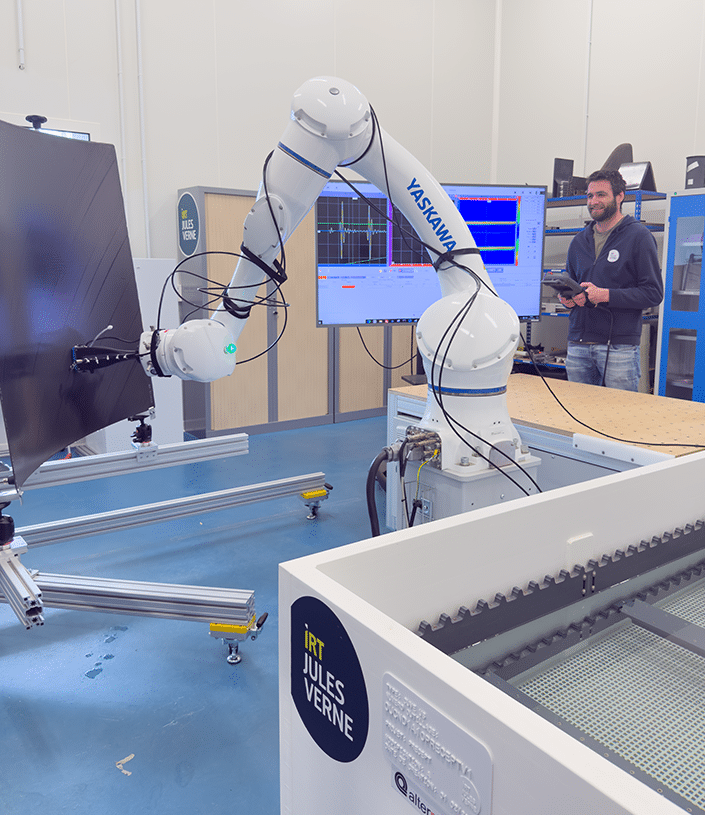
To reduce inspection costs, IRT Jules Verne develops innovative technologies in process monitoring (PHM), non-destructive testing (NDT) and integrated health control (SHM) at its premises in Nantes.
The team also offers the digital tools essential for the automatic real-time analysis of the data collected, in particular by using artificial intelligence to predict the quality of parts, provide feedback on processes, assist the operator in his diagnosis and ensure the digital continuity of all operations in the production range. The solutions developed are then deployed in production and maintenance in the aeronautics, naval, energy and transport sectors.
Led by Nicolas Terrien since 2022, the team is made up of around fifteen experienced experts, PhDs, engineers and R&D technicians and uses cutting-edge technological platforms to carry out its research work.
- Monitoring of manufacturing processes
- Automated and flexible non-destructive testing
- Automatic analysis of inspection and monitoring data
- Integrated health monitoring of structures
Robotics & Cobotics
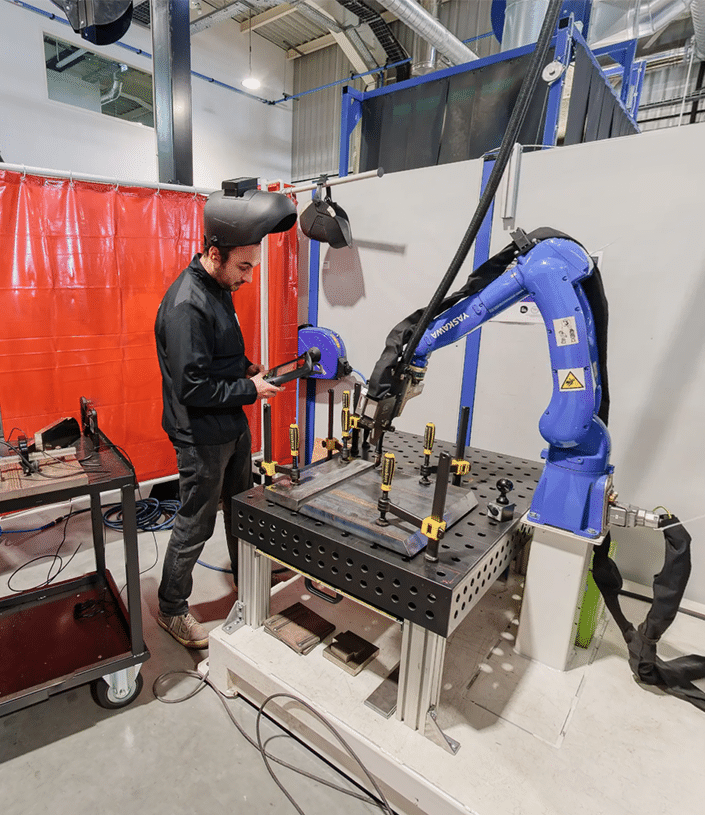
The flexible and smart industry is taking shape in Nantes, at IRT Jules Verne. Since 2012, our technology team specializing in industrial robotics and cobotics has been developing solutions tailored to the production challenges faced by French manufacturers. These innovations take shape through national and European collaborative research projects and research services.
Our goal: to automate composite and metalworking processes and optimize the deployment of robots in complex industrial environments.
Comprising some twenty experts, engineers, technicians, and doctoral students, the team is led by Sébastien Rubrecht and has access to cutting-edge, proprietary resources, delivering robust and flexible robotic and cobotic solutions. These solutions are designed for rapid industrialization and address the challenges of flexibility, performance, precision, and ergonomics.
At IRT Jules Verne, R&D in robotics and cobotics works in synergy with the institute’s other areas of technological expertise, which specialize in metalworking processes, composite processes, simulation, and process monitoring.
- Automation of composite and metal fabrication processes
- Automated programming
- Precision compliant robotics
- Vision-based control
- Parallel cable robotics
- Localization & navigation of collaborative mobile robots
- Digital factory: diagnostics and optimization of production flows
Notable examples of France 2030 projects led by IRT Jules Verne
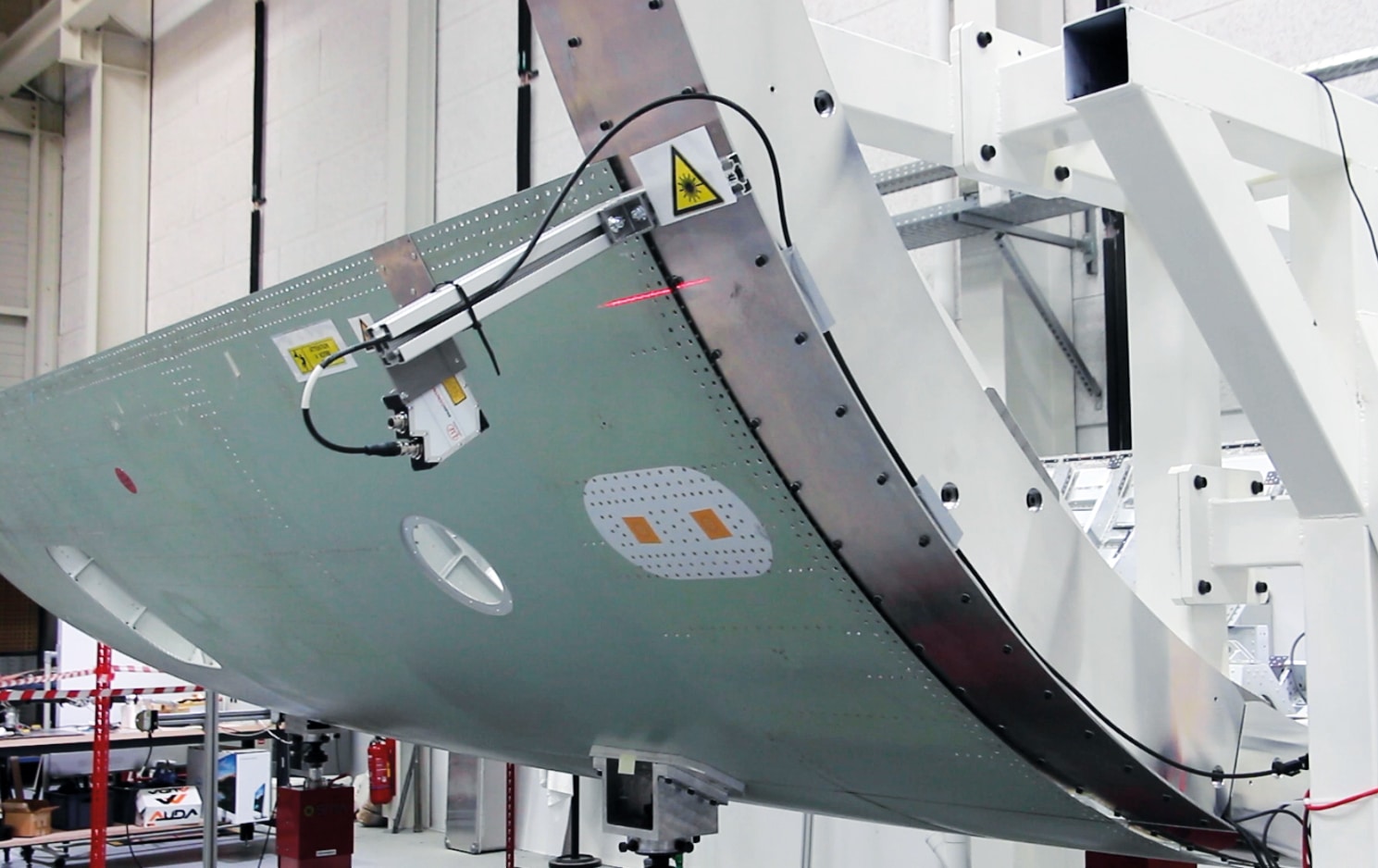 Automating the Precise Assembly of Large Structures with Continuous Servo Control
HAPPY and HAPPY2 projects develop lightweight and flexible positioners, driven by local or global measurements, to handle and position large parts in the aeronautics and naval defense industries.
Read the case study
Automating the Precise Assembly of Large Structures with Continuous Servo Control
HAPPY and HAPPY2 projects develop lightweight and flexible positioners, driven by local or global measurements, to handle and position large parts in the aeronautics and naval defense industries.
Read the case study
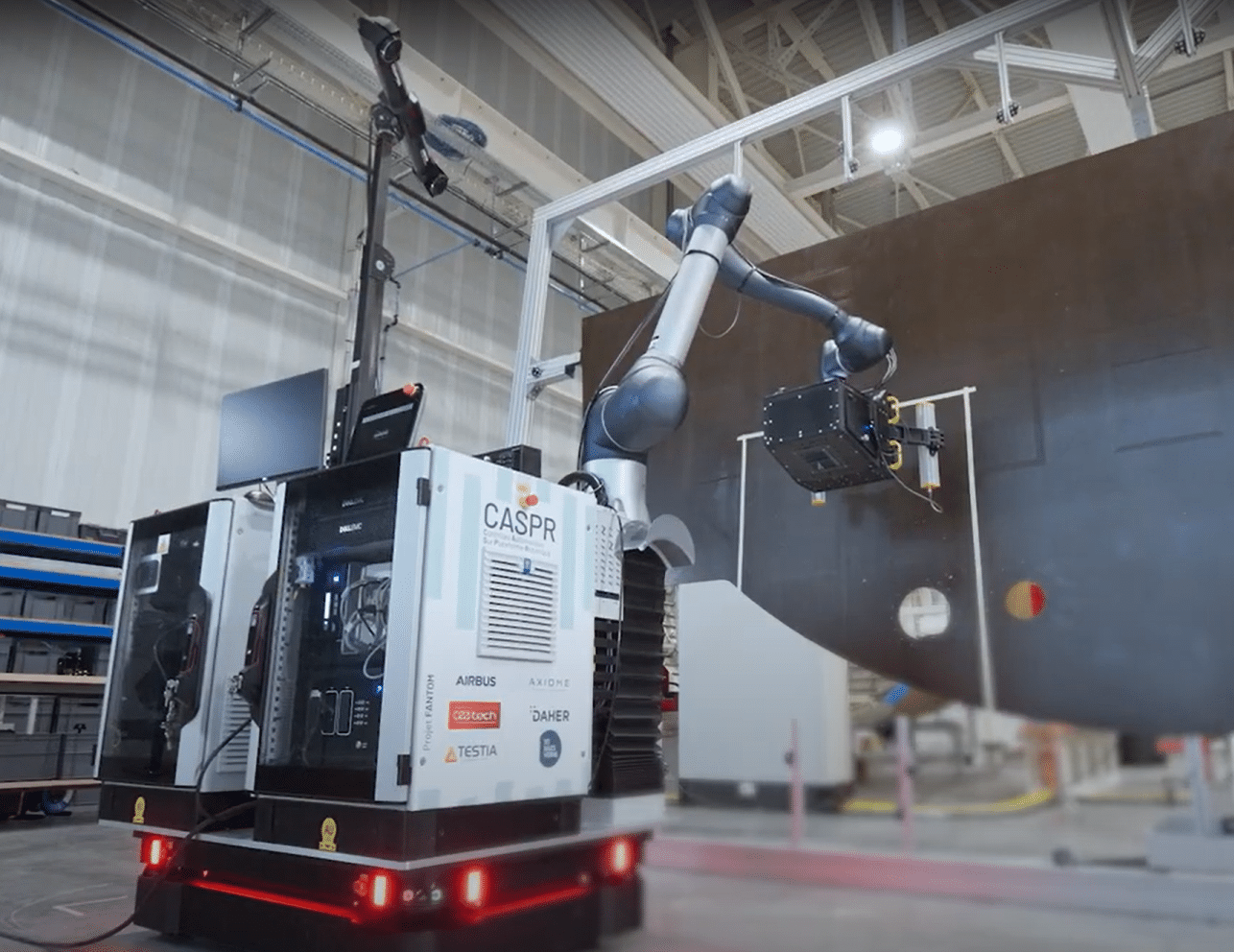 Automating the non-destructive testing of composite parts with an intelligent robotic platform
The FANTOM project is developing a flexible and automated non-destructive testing platform to make the inspection of composite parts more reliable and to support the digital continuity of production lines.
Read the case study
Automating the non-destructive testing of composite parts with an intelligent robotic platform
The FANTOM project is developing a flexible and automated non-destructive testing platform to make the inspection of composite parts more reliable and to support the digital continuity of production lines.
Read the case study
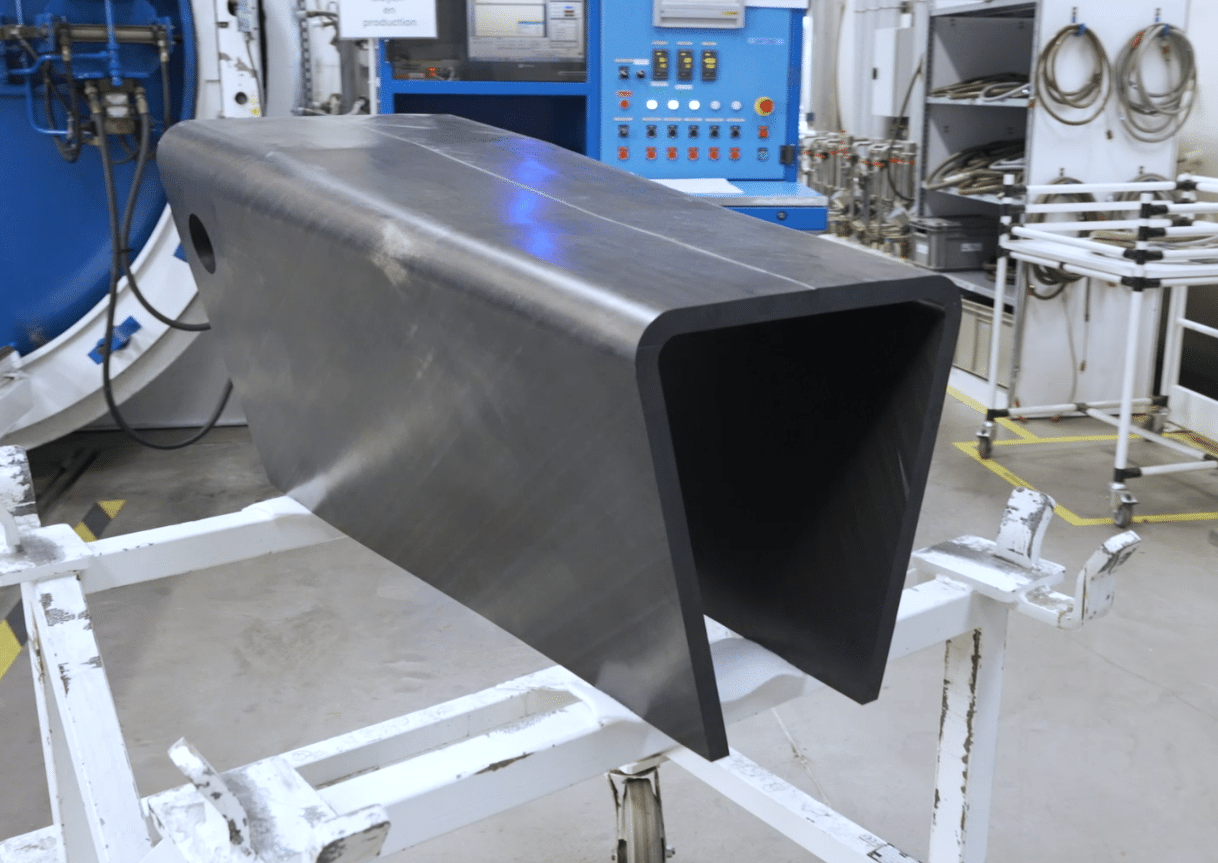 Developing the manufacture of high-thickness thermoplastic composite parts for aeronautics
The MATCH project develops innovative manufacturing, simulation and machining processes to produce high-performance, robust thermoplastic composite parts adapted to the requirements of the aeronautics industry.
Read the case study
Developing the manufacture of high-thickness thermoplastic composite parts for aeronautics
The MATCH project develops innovative manufacturing, simulation and machining processes to produce high-performance, robust thermoplastic composite parts adapted to the requirements of the aeronautics industry.
Read the case study
Other opportunities for collaboration with IRT Jules Verne
- 01 French calls for proposal Take part in national calls for proposals alongside IRT Jules Verne. Our offer
- 02 European calls for proposal Join European consortia working in the industry of the future. Our offer
- 03 R&D services Take advantage of our resources and expertise to meet your specific needs. Our offer
- 04 Training Train your teams in the manufacturing technologies of the future. Our offer