
A Ph.D. programme to stimulate early-stage research in manufacturing
To help manufacturers stay one step ahead technologically, IRT Jules Verne launched PERFORM in 2017: a doctoral programme aimed at advancing upstream research in the field of manufacturing.
Its goal: to stimulate basic research aligned with IRT Jules Verne’s R&D topics centered on advanced production technologies.
This innovative programme helps strengthen the research workforce in the field of the factory of the future and contributes to advancing this area of excellence specific to the Loire region. Funding is provided by IRT Jules Verne (France 2030), industry partners, the Pays de la Loire Region, and Nantes Métropole.
- PERFORM is the IRT Jules Verne doctoral program launched in 2017, dedicated to promising R&D topics in manufacturing
- PERFORM gives manufacturers access to the findings of 18 dissertations tailored to their needs
- The commitment by manufacturers is for three years, with a limited financial investment
- The program has already been adopted by AIRBUS, AIRBUS Atlantic, DAHER, NAVAL GROUP, SAFRAN, and CHANTIERS DE L’ATLANTIQUE
They trust us






What are the challenges of the IRT Jules Verne thesis programme?
perform allow to:
- Prepare for the future and initiate R&D Projects
- stay ahead of the curve in technology
- Contribute to the Loire Valley’s excellence in the industry of the future
Why join the PERFORM thesis programme?
- 01 For Manufacturers Access the results of a set of 18 dissertations focused on topics they have defined and have a truly targeted monitoring tool at their disposal.
- 02 For Academics Gain additional leverage to advance targeted basic research and create new opportunities for collaboration with the participating industry partners.
- 03 For IRT Jules Verne Prepare for the future by contributing to the advancement of cutting-edge research in its key areas and by building on the work carried out by doctoral students.
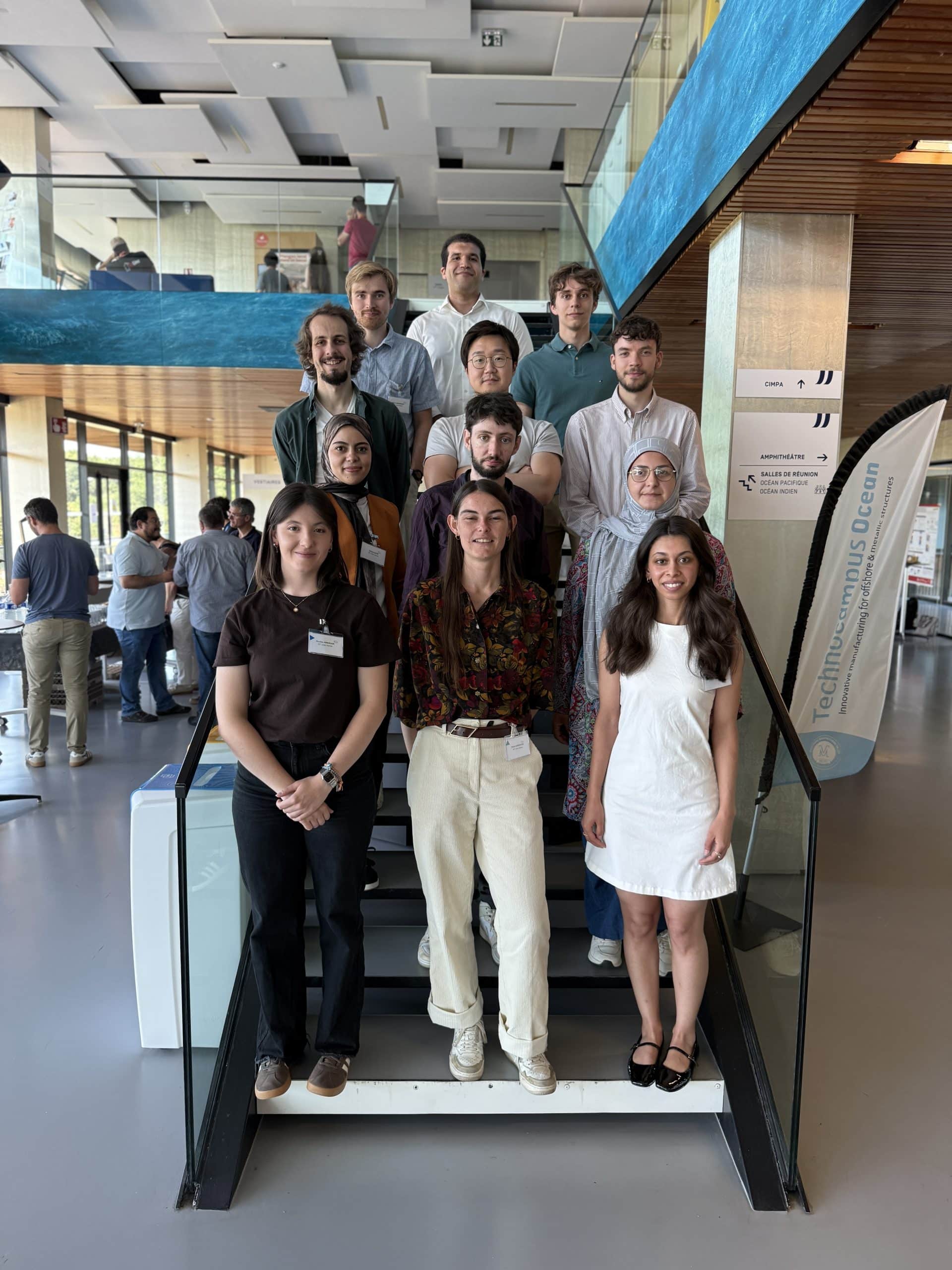 Ph.D. students
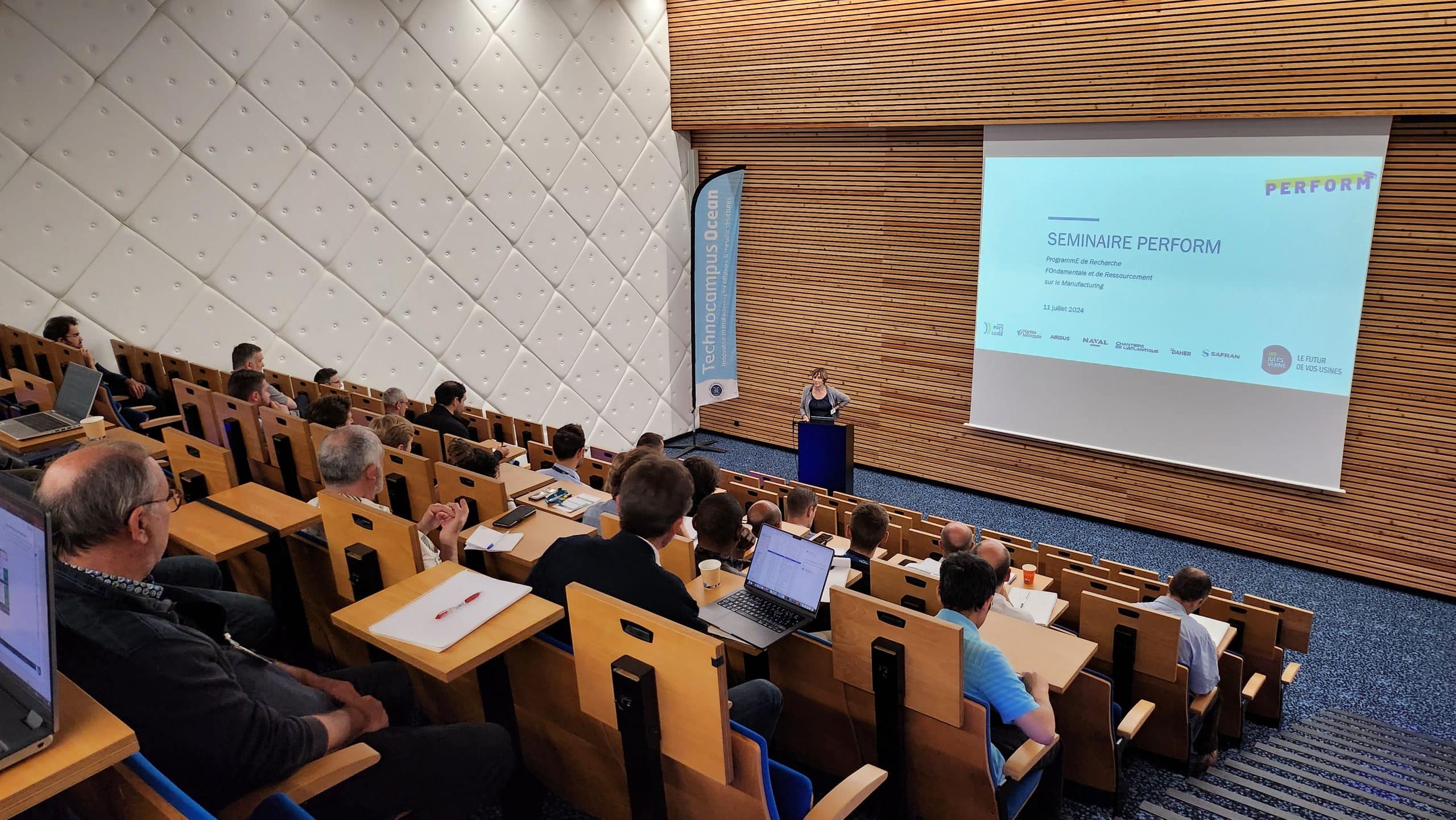 perform Seminar
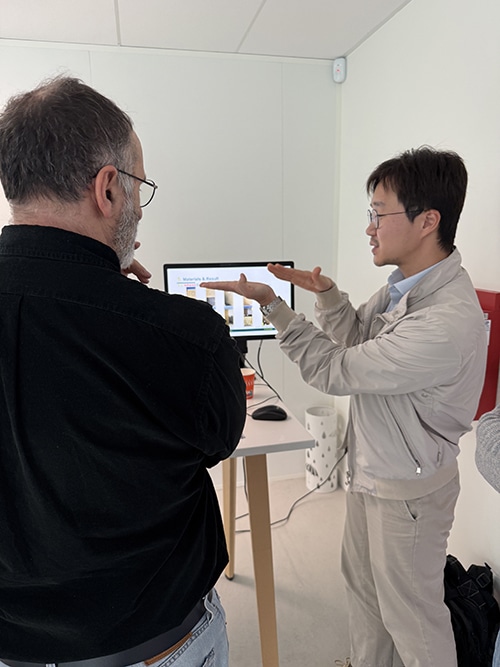
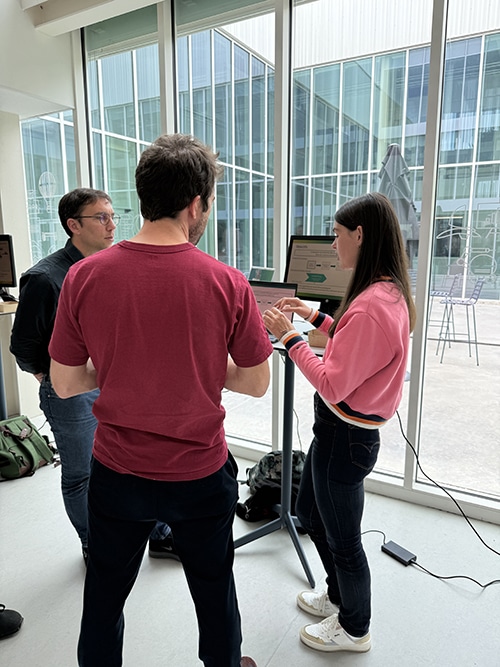
PERFORM: how does the PhD programme work?
The programme is based on a system of clusters of theses
The latter are initiated in groups within focused areas in order to achieve a significant overall impact. The themes are jointly defined each year by IRT Jules Verne and its industrial partners. The program consists of 18 theses and has an annual budget of 1.3 M€.
OUR CORNERSTONES
- 01 Funding for thesis clusters, to maximize the return on investment and the richness of actionable results
- 02 6 theses per year, 18 on a regular basis
- 03 Joint development and management of the program with partners
- 04 Sharing of intellectual property between IRT Jules Verne and Academic partners
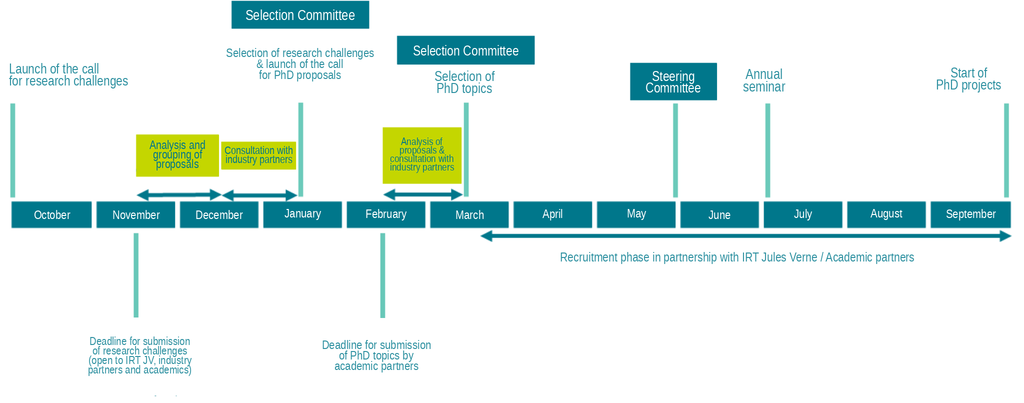
Annual program process
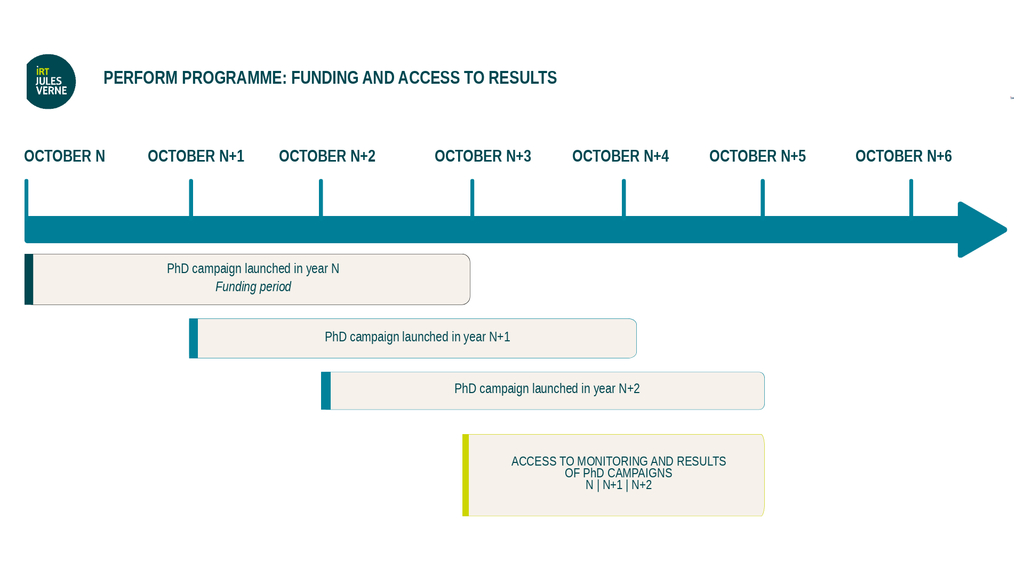
Access to results
Research Topics of the PERFORM Programme
PERFORM addresses high-stakes issues for the future of manufacturing, including:
- Composite processes
- Metal-based processes, including additive manufacturing
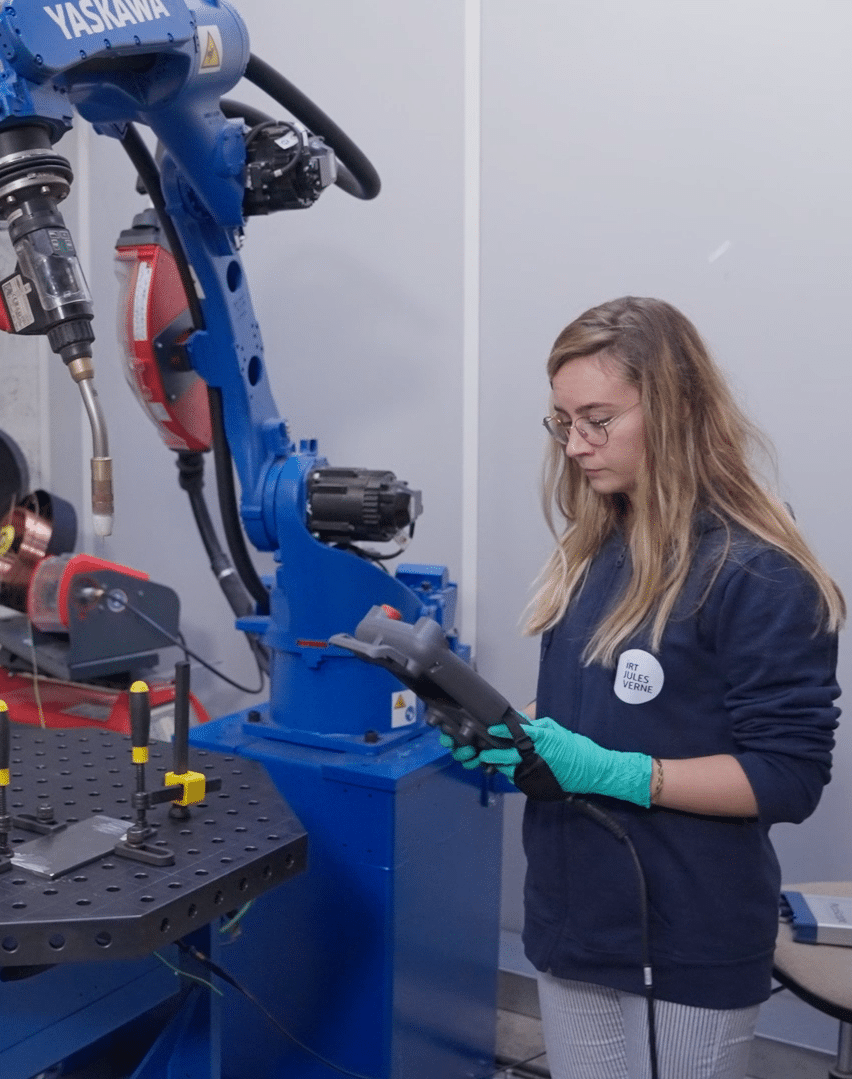
- Robotics
- Flexibility in manufacturing
- Digital manufacturing
Some examples of recent issues we have addressed:
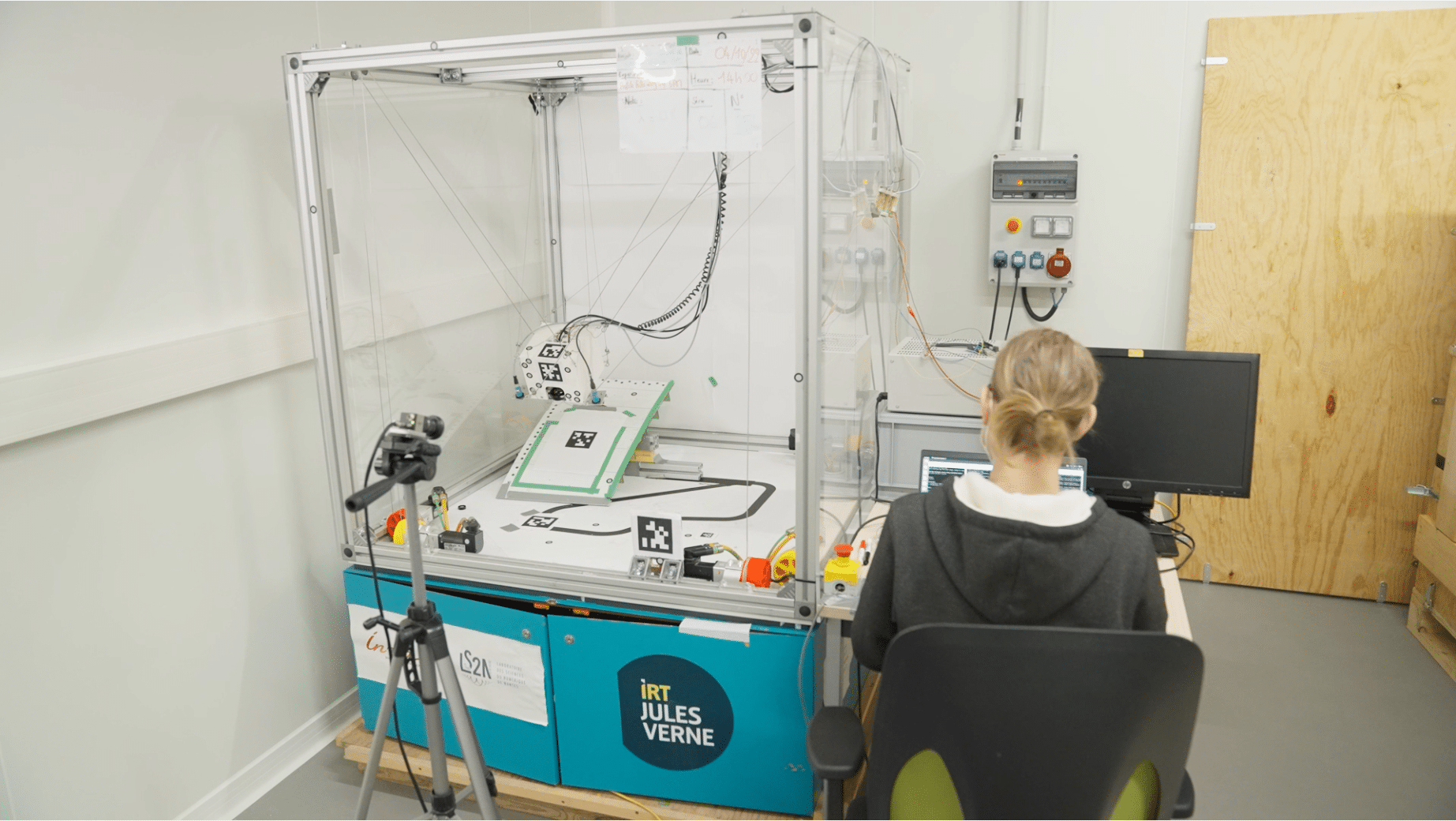
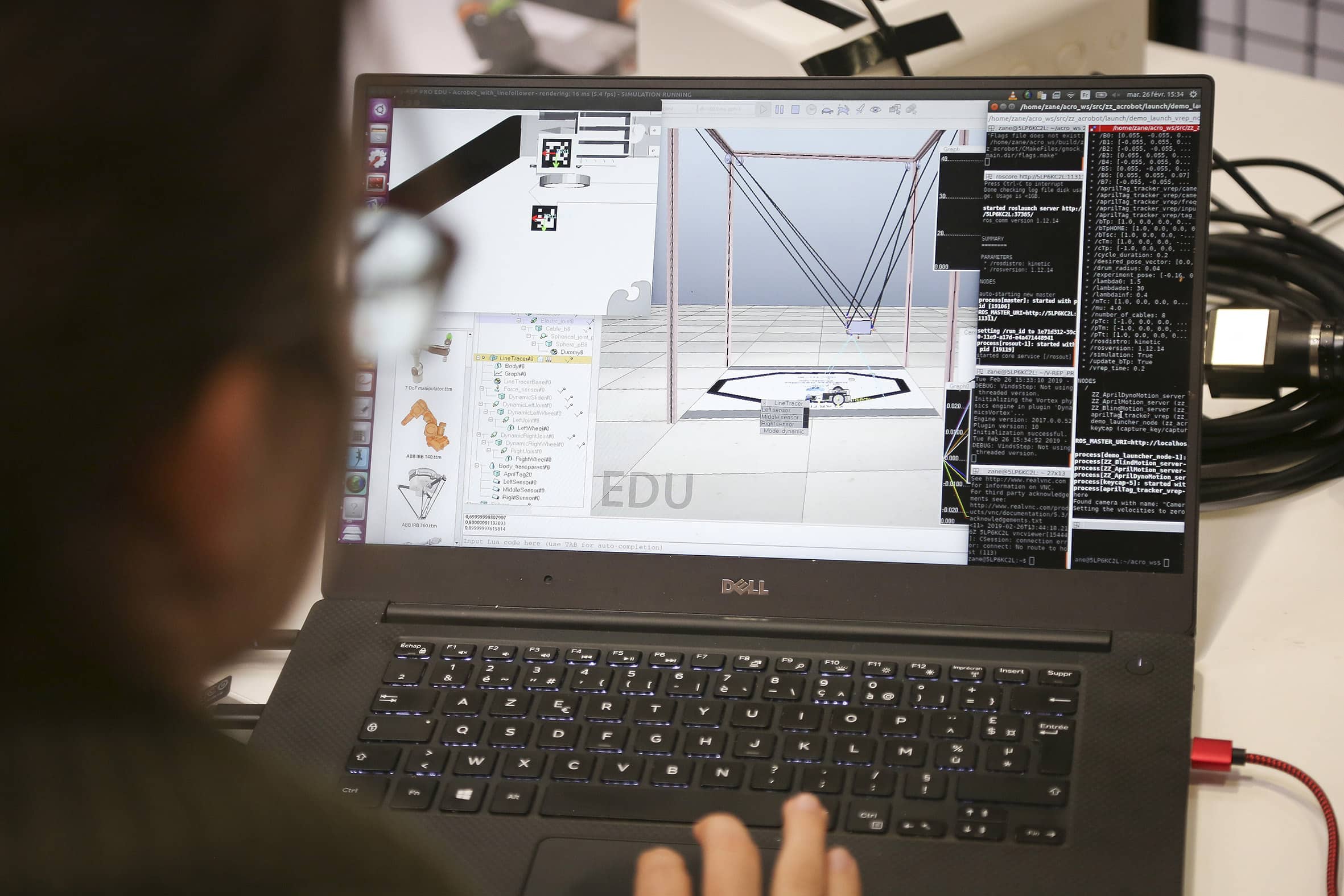
- Manipulation and control of the deformation of flexible objects for 3D forming applications in industrial processes.
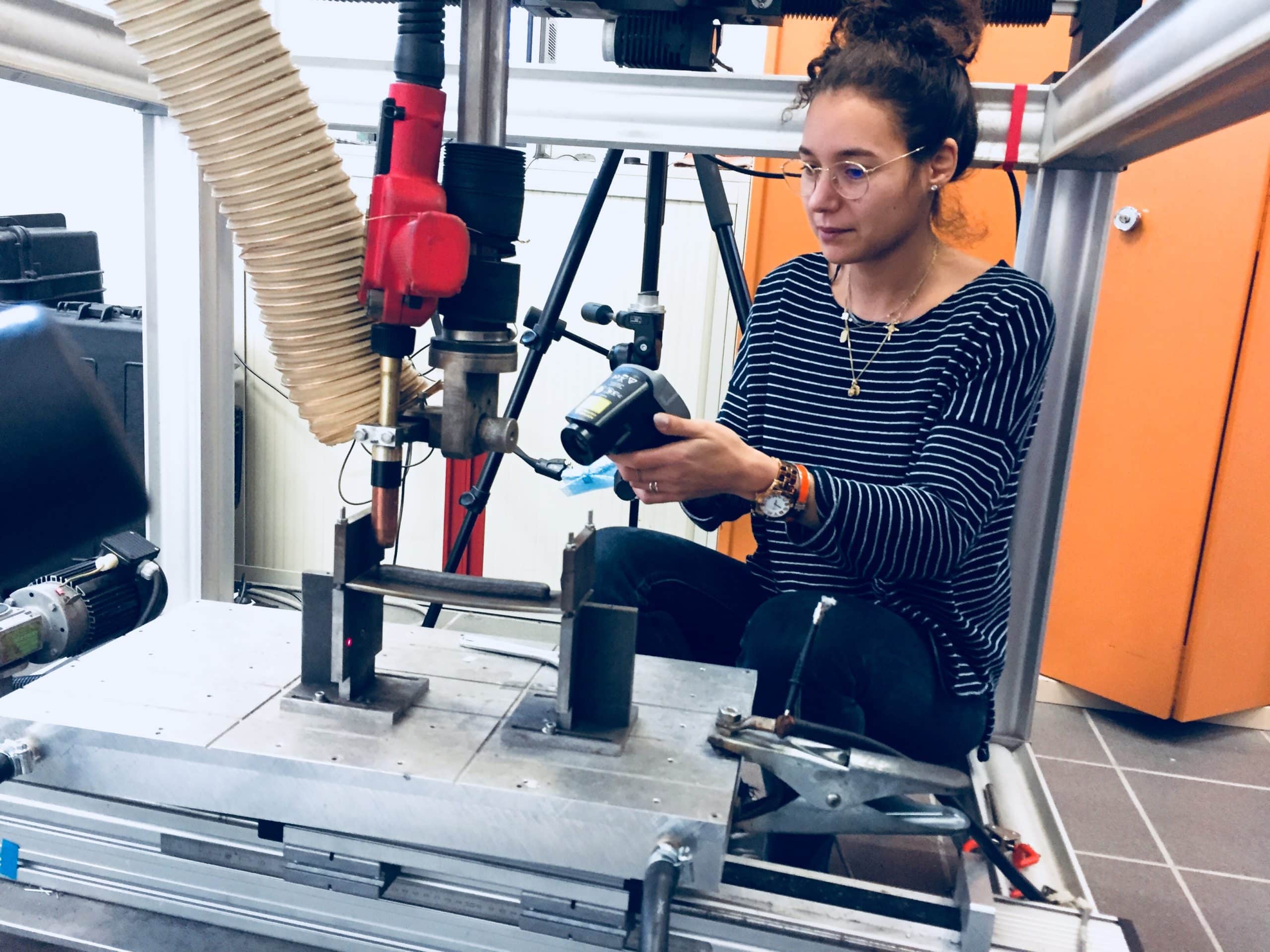
- Control of Thermal Phenomena in Direct Energy Deposition Additive Manufacturing
- Energy Optimization of Thermal Manufacturing Cycles.
How to get involved in PERFORM?
The commitment from industry partners is for three years, which allows them to track the progress of all the thesis projects launched during that period (18 in total) for a limited financial investment.
| Type of business (by number of employees) | Annual membership fee (€) |
| n ≥ 1000 | 25 000 |
| 250 ≤ n ≤ 999 | 10 000 |
| 20 ≤ n ≤ 249 | 5 000 |
| n < 20 | 2 500 |
All current PERFORM theses
-
 Pauline ARNOULIN SIS, GeM, Nantes Université
Thermal Control to optimize deposition rate in Wire Arc Additive Manufacturing (WAAM). Application to stainless steel alloys using dual-wire TIG welding: optimization of microstructure and stress Distribution.
-
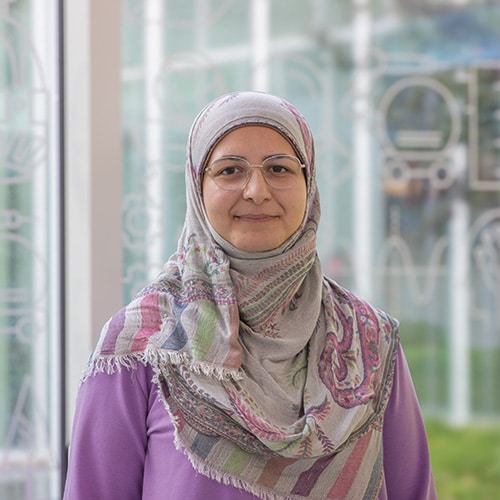 Hawraa BECHER MaSTIC, IREENA, Nantes Université
Control of interfaces during inductive welding, specifically for the heating and cooling phases
-
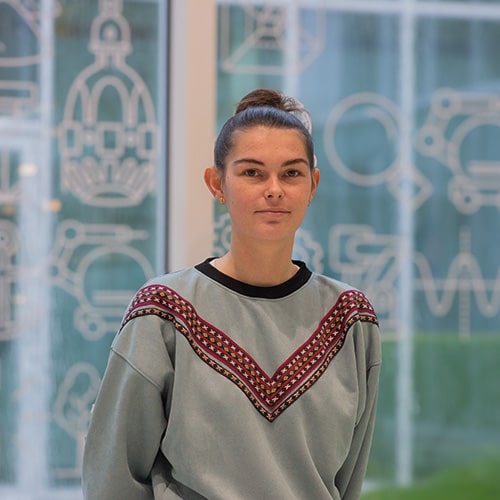 Flavie LARGENTON SMI, LAMPA & I2M, ENSAM Angers
A study of the recyclability of long carbon fibres – contributions to processes and mechanical behaviour.
-
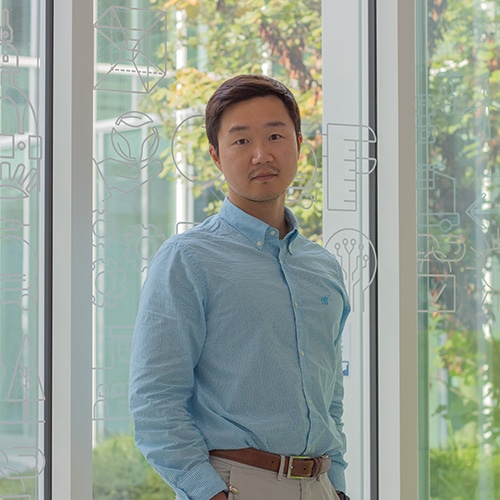 Kyu-Taek KIM SPI, LAUM, Le Mans Université
Visual optical experimental methods for the detection and characterisation of defects in metallic and composite structures
-
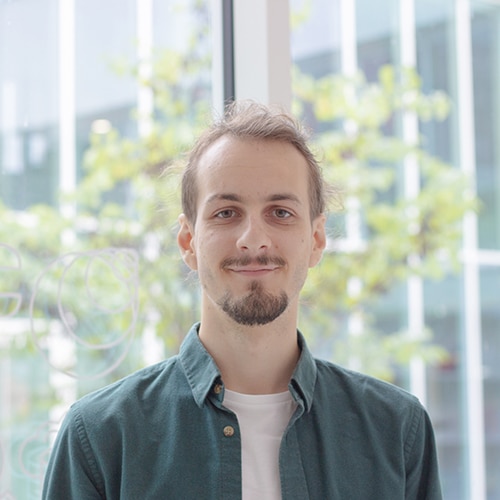 Valentin CLAVIER SIS, GeM, IMN, Nantes Université
Thermo-mechanical-metallurgical simulation of the manufacture of titanium alloy components using the WAAM process and of their mechanical behaviour using a mean-field approach.
-
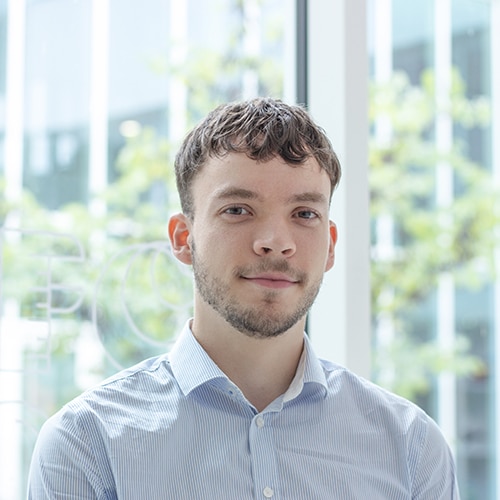 Arthur RAQUIN 3MG, IMN, Nantes Université
Improvement of the mechanical properties of titanium alloy components produced by WAAM additive manufacturing using molten pool vibration
-
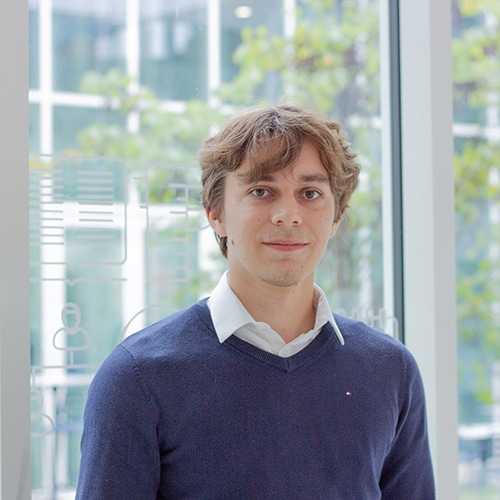 Guillaume LEBRETON SIS, LTeN, Nantes Université & ICAM Ouest
Rapid processing of vitrimer composites and investigation of their reprocessability for aerospace applications
-
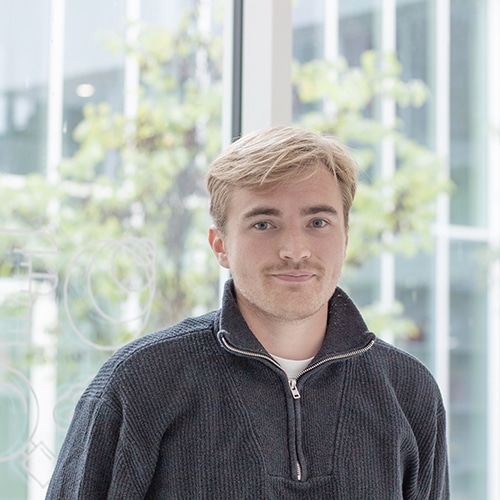 Pierre WAROQUIER SIS, LTeN, Nantes Université
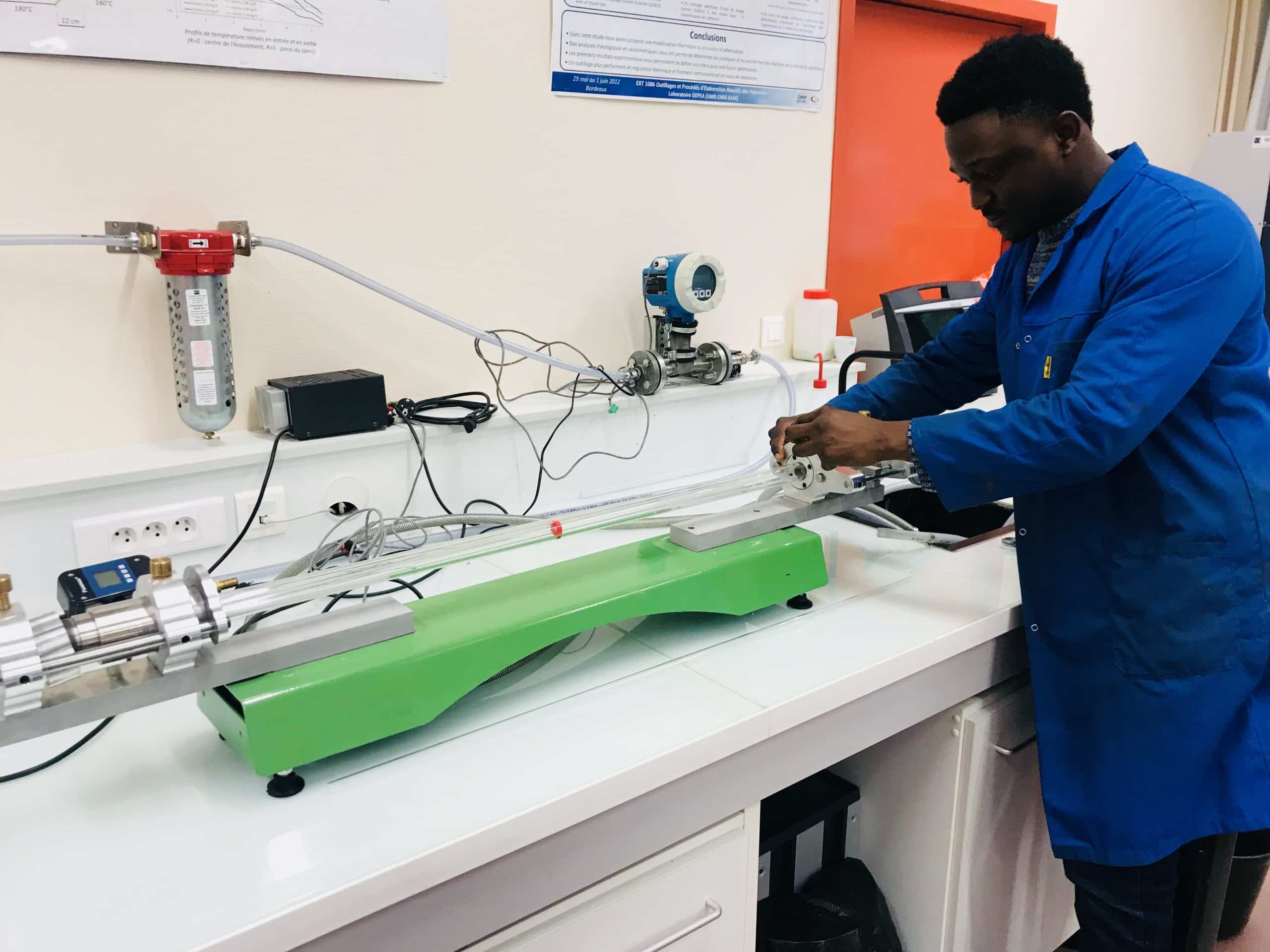
Anisothermic development of adhesion between two thermoplastic composites – Modelling, characterisation and application to industrial processes
-
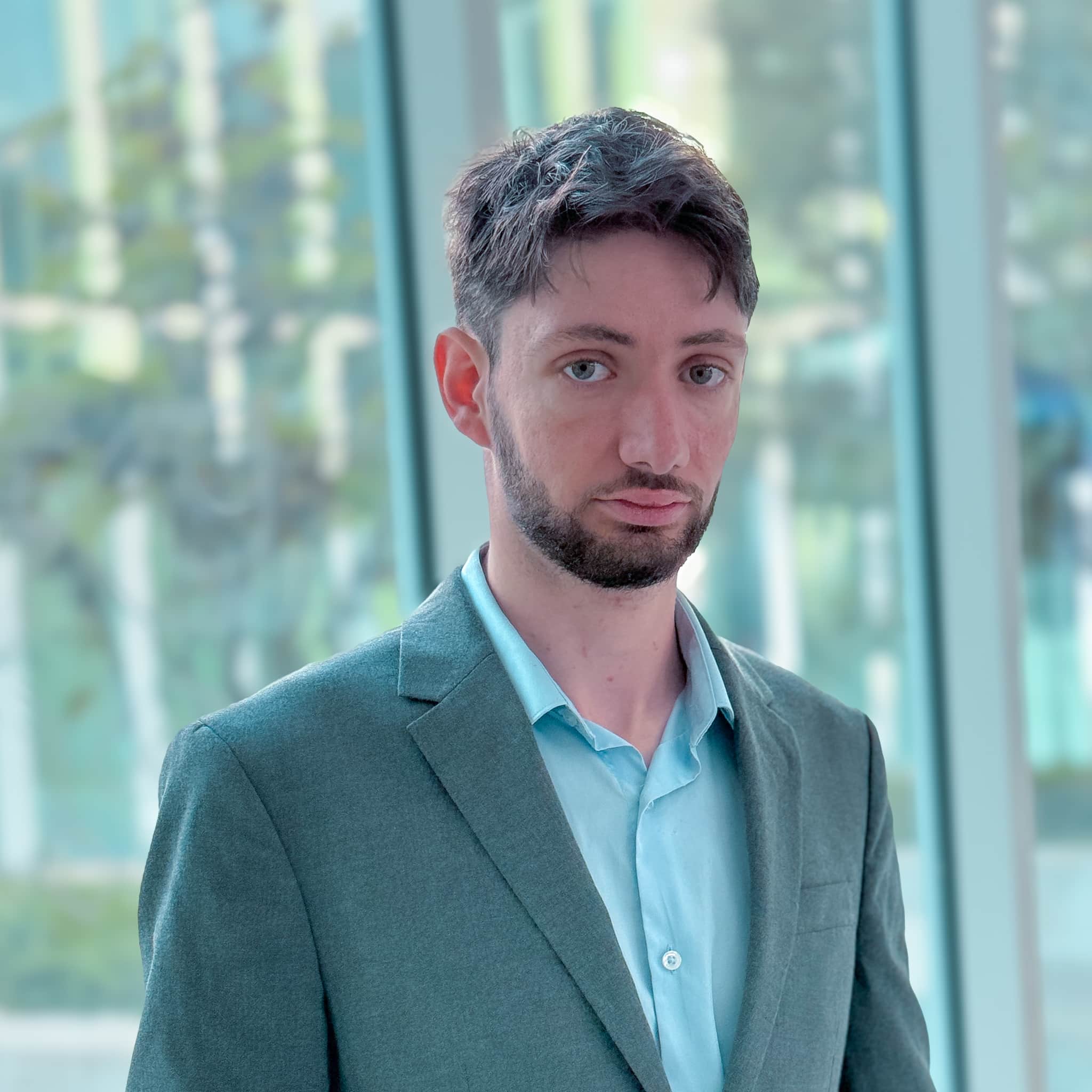 Johan BERRIER GONZALEZ Matisse, INRIA, Université de Rennes
Shaping carbon fibre fabrics using vision-based control
-
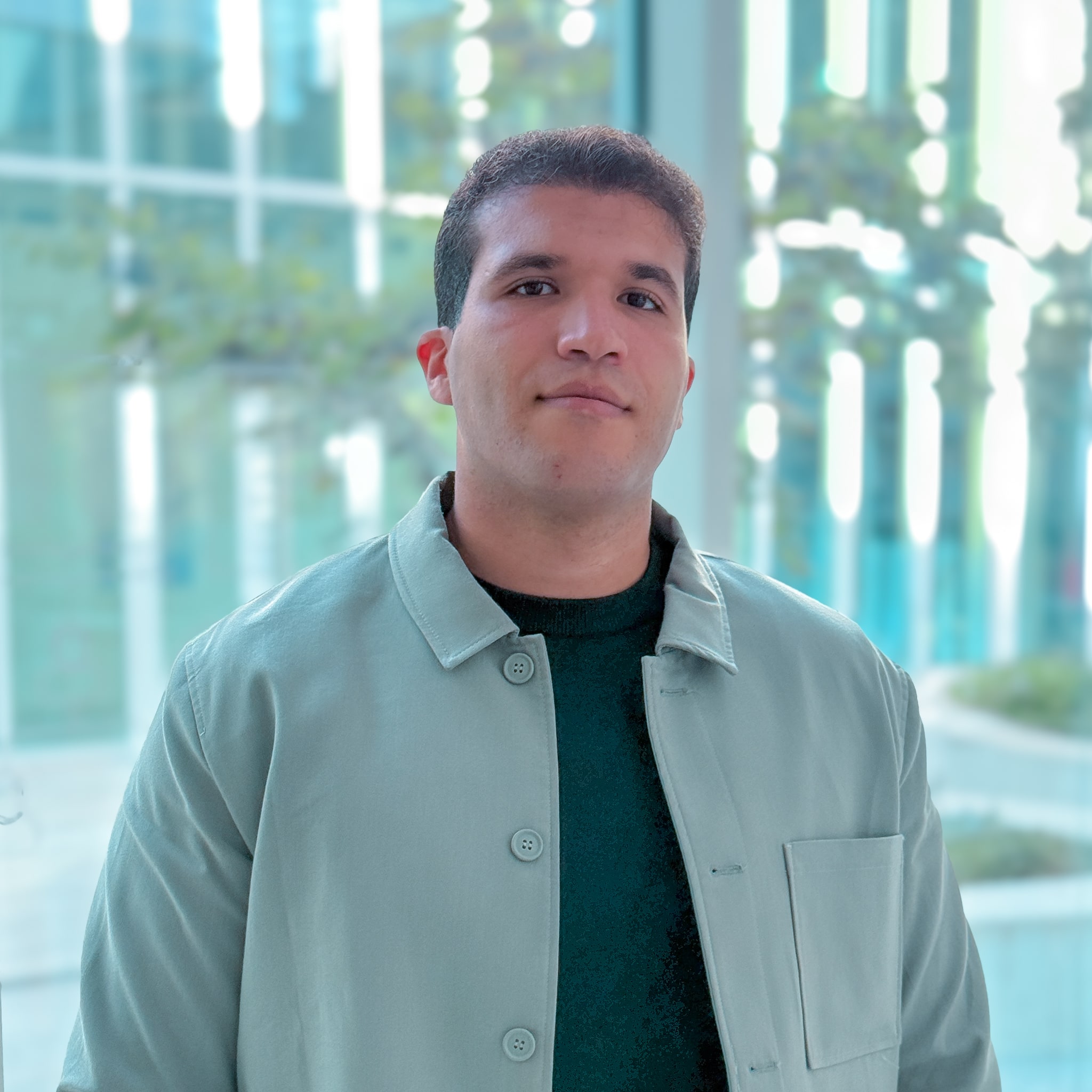 Mohamed Abdelmalek BOUCHERIKA PHF, LAMIH, Université Polytechnique Hauts de France
Robust shaping of deformable objects using visual servoing in the form of a quasi-LPV polytopic model
-
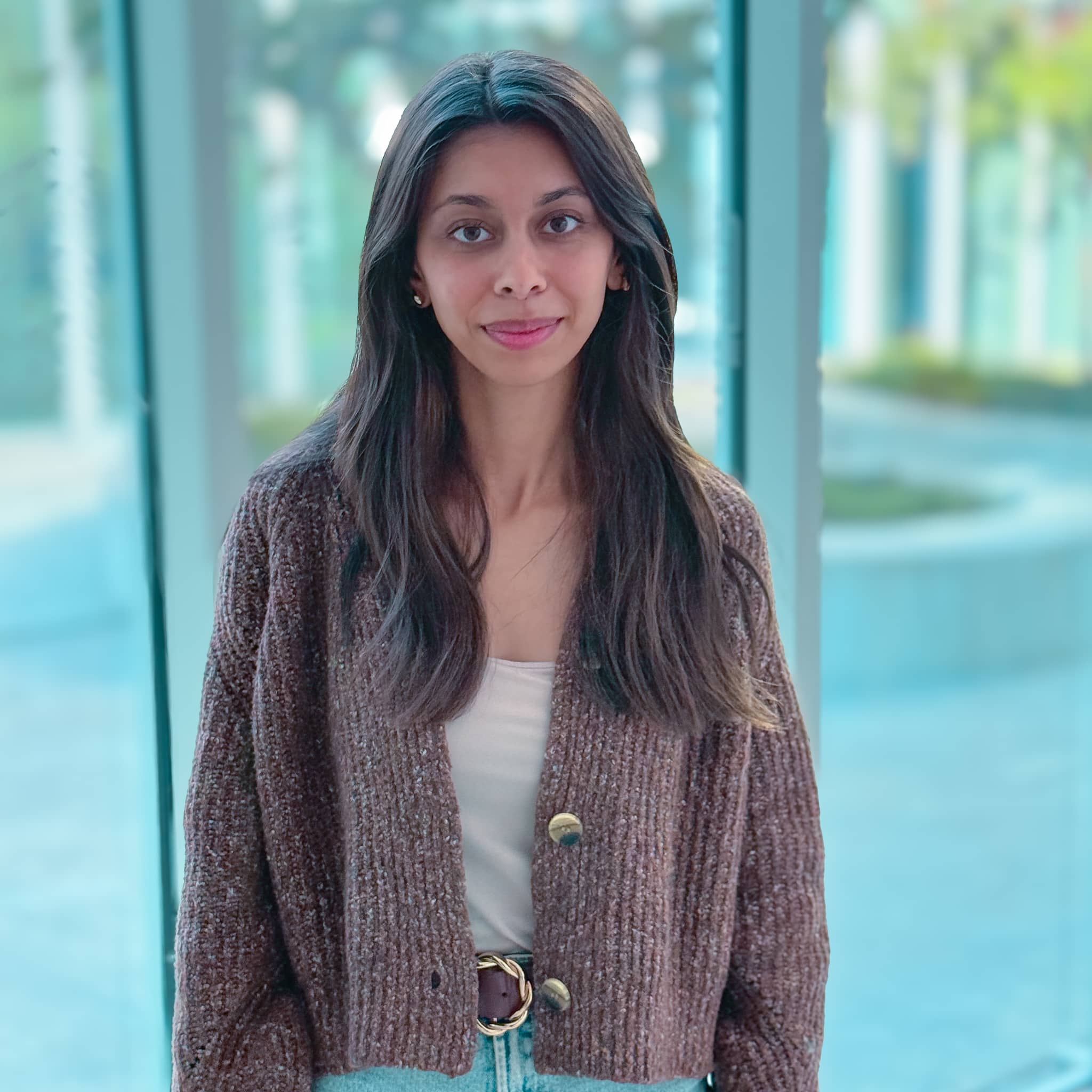 Fatma BENSAAD SIS, LTeN, Nantes Université
Spatio-temporal control of thermal conditions at the boundaries of a composite component with considerable thickness and significant thickness variation, with the aim of controlling the polymerisation kinetics.
-
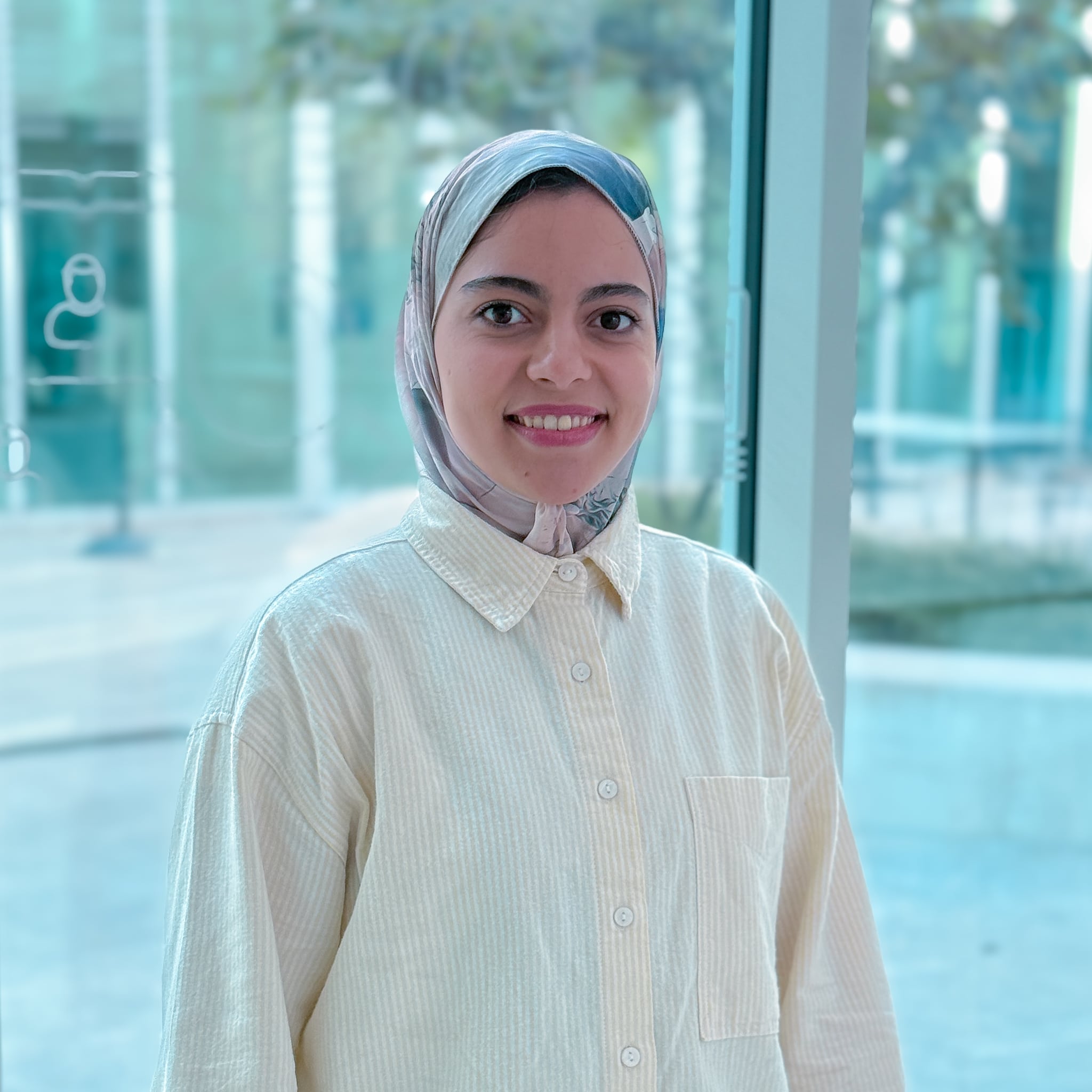 Manal AATIK SIS, LTeN, Nantes Université et ICAM
Improving the energy efficiency of manufacturing equipment operating on a thermal cycle by recovering waste heat
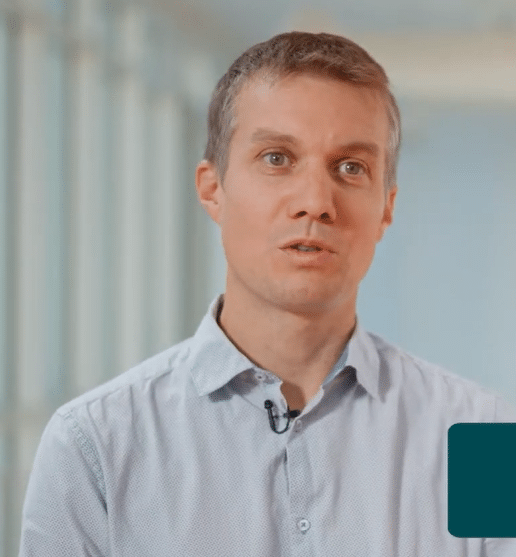
For an industrial partner, PERFORM is a solution that enables them to secure PhD theses under highly favourable conditions. By working within the IRT, it allows us to pool our resources and act collectively, thereby securing a much larger number of PhD theses than any individual partner could fund on their own. Human resources are also a major challenge for our ecosystem in the coming years. By getting involved in this programme, we are helping to train young researchers who have a good understanding of the expectations of the industrial sector.
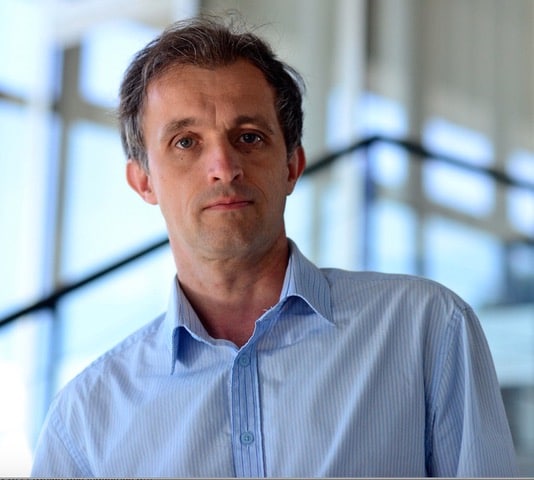
The PhD students’ presentations are of a very high standard and accessible to a wide audience. The PERFORM programme is highly effective; we are heavily involved in it, as we supervise the theses. Apart from PERFORM, École Centrale also works closely with the IRT Jules Verne, participating in collaborative projects as a partner.
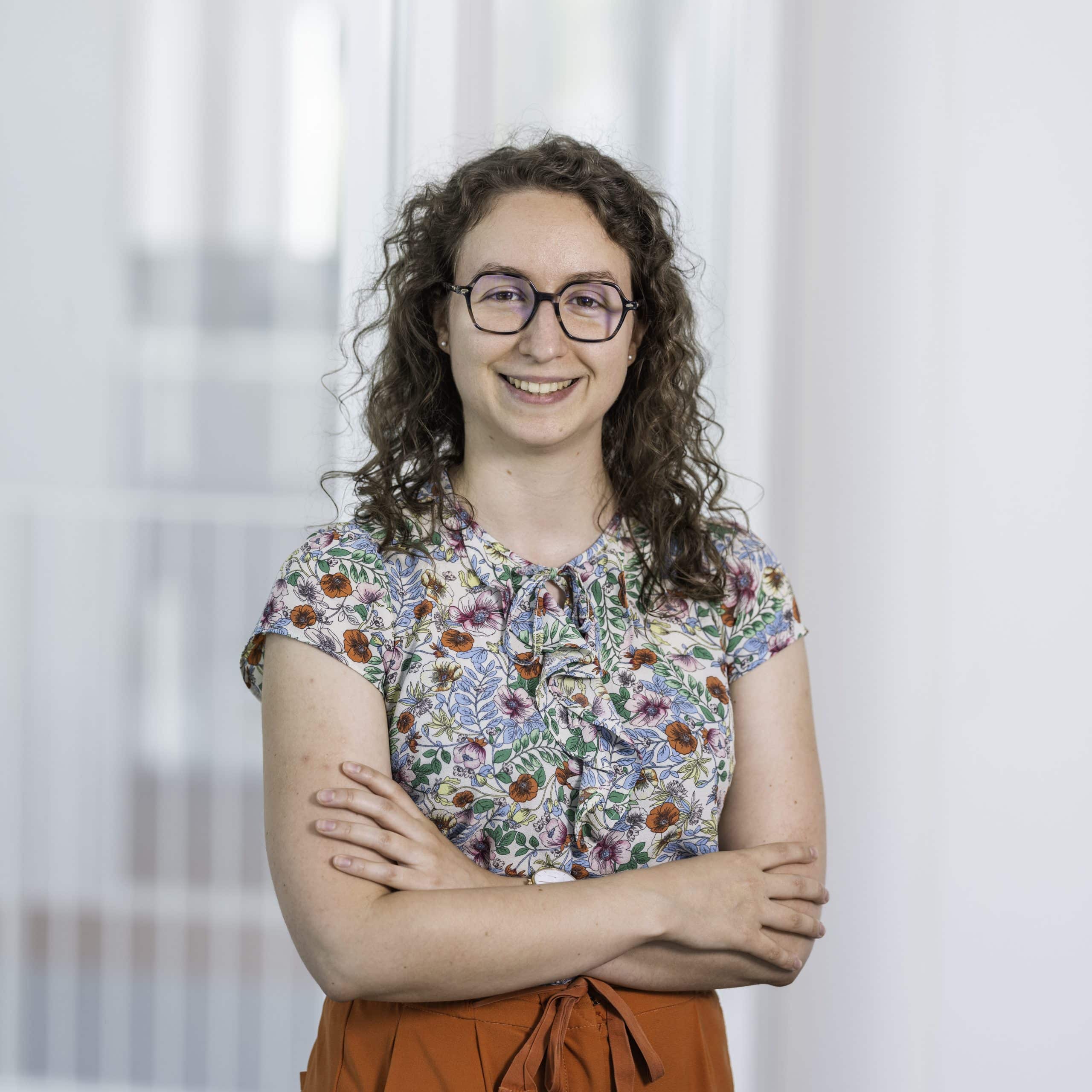
It was very important for me to realise that my work has a tangible impact and that it can be put to direct use by industry. It’s quite rewarding to be able to talk to other PhD students working in completely different fields; we wouldn’t have had this opportunity for exchange if we’d been doing a traditional PhD.
‘My PhD at IRT Jules Verne’: former PhD students share their experiences
Open Youtube playlist
Find out more about the IRT Jules Verne’s five areas of technological expertise
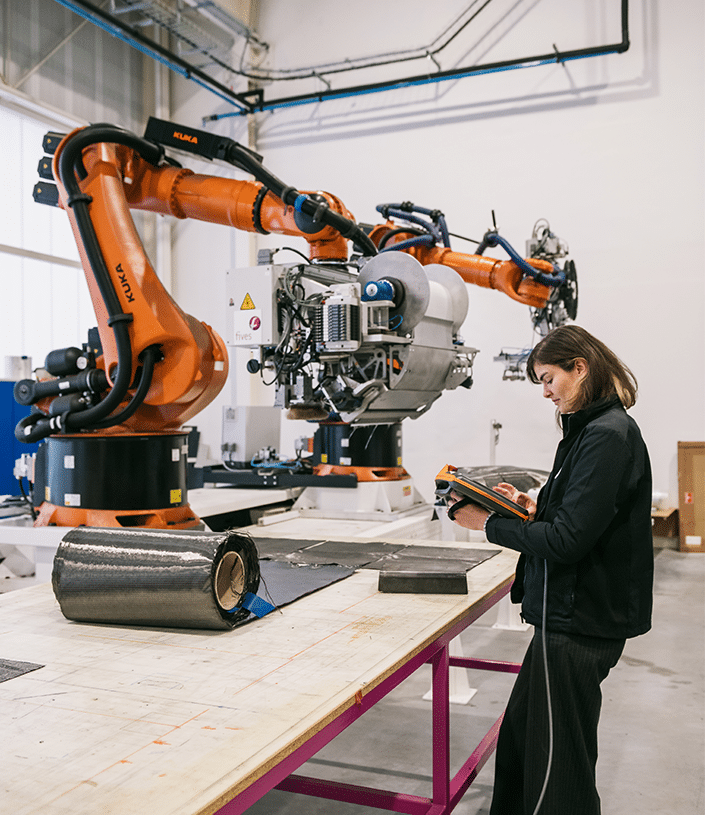
Composites
Based near Nantes, the IRT Jules Verne has, since its creation in 2012, developed outstanding expertise in the manufacturing processes for composite parts and structures.
As the core activity that led to its creation, the institute’s expertise in composite materials processes is now recognised at both national and European levels. IRT Jules Verne is also recognised as a key player in the field within international networks, notably JEC World, which has on several occasions recognised the groundbreaking technological innovations developed at the institute.
With a multi-sector technological research team dedicated to composite materials and processes, IRT Jules Verne leads collaborative national and European R&D projects and provides R&D services to address industrial performance challenges, particularly those relating to the manufacture of complex and large-scale structures.
The R&D activities combine the development of innovative processes with product design in order to optimise production costs, meet production rate targets and reduce environmental impact. They cover thermoplastic and thermosetting composite materials, from preforming and shaping through to assembly.
Linking up with IRT Jules Verne’s expertise in modelling and simulation, robotics and process monitoring, the team develops comprehensive solutions, from technical and economic feasibility studies through to full-scale industrial demonstrators.
- Large-scale automated preforming
- Liquid impregnation processes: thick infusion, RTM injection and isothermal CRTM
- Forming processes: thermocompression, stamping/overmolding and non-autoclave consolidation
- Welding of TP composites
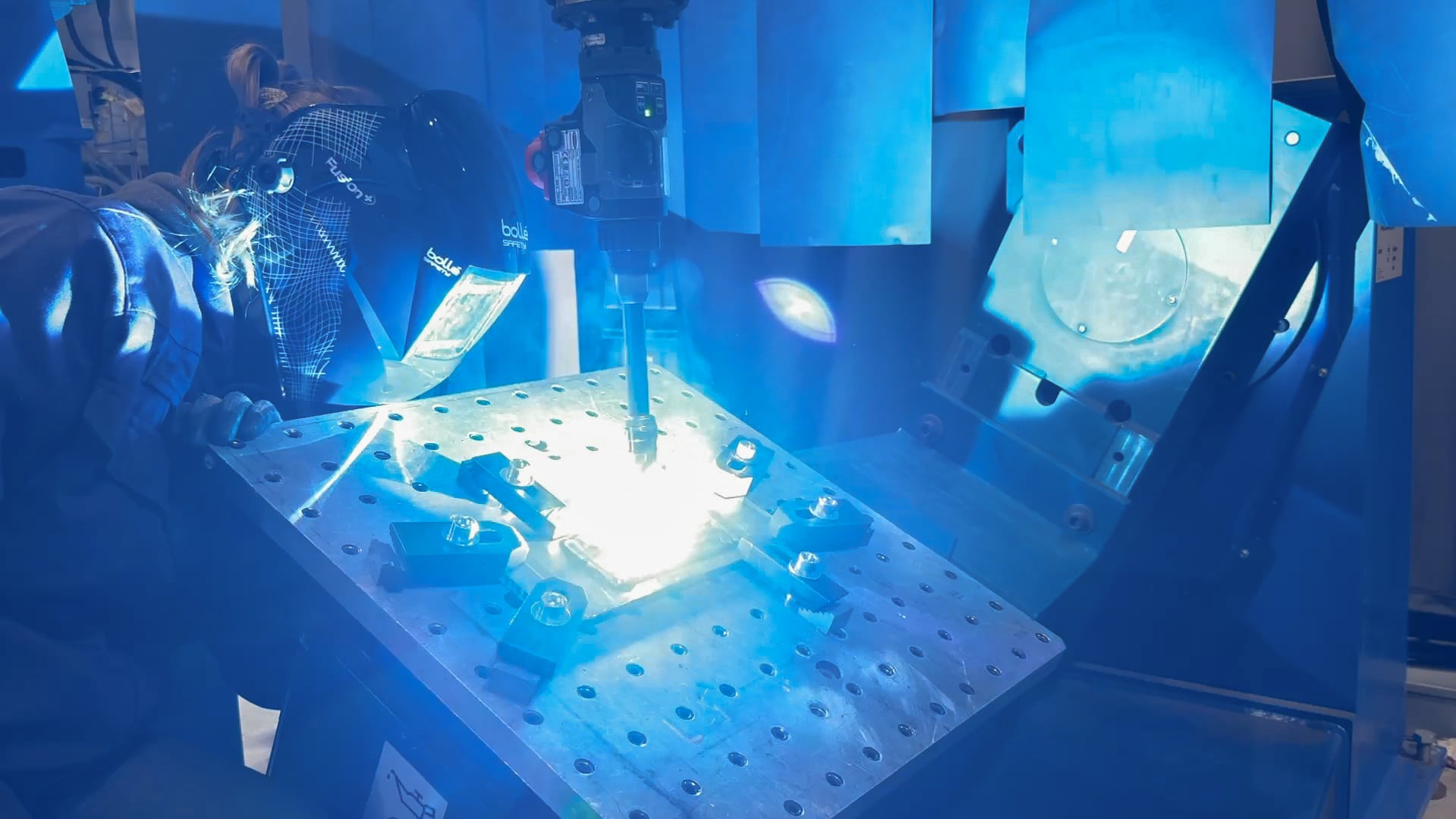
Metallic
Metal welding & additive manufacturing
Innovative metal processes are one of the pillars of the technological research carried out at the IRT Jules Verne (Nantes) since 2012. The objective is twofold: to industrialize additive manufacturing technologies (DED-fil and AFSD) and to automate welding assembly (Arc and FSW) by improving productivity and quality.
Supervised by Grégoire Bazin, our technological research team is made up of about fifteen R&D engineers, experts, technicians and PhD students. It develops innovations for metal manufacturing processes based on additive manufacturing and metal welding technologies in liquid and solid state.
The team relies on know-how in metal processes and materials and on state-of-the-art equipment that differentiates it. It works in synergy with the other research teams of the IRT Jules Verne in order to offer global support.
- Automated Metal Welding Assembly
- Large-Scale Metal Additive Manufacturing Using DED Wire (Liquid State)
- AFSD Large-Scale Metal Additive Manufacturing (Solid-State)
- Repair and Reloading
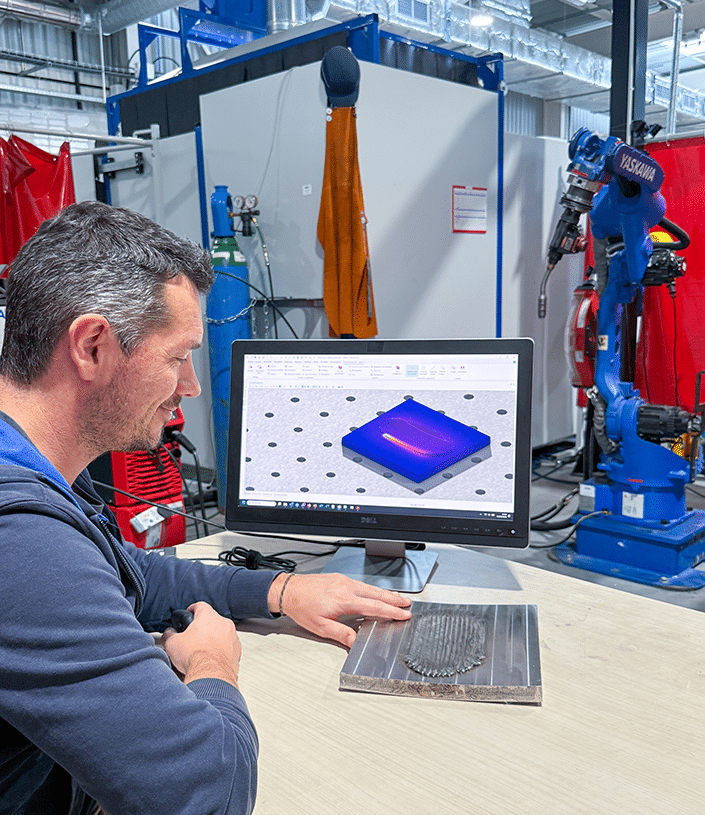
Modelling & Simulation
To enhance the competitiveness of the industrial sector, IRT Jules Verne relies on modeling and numerical simulation of manufacturing processes to address the major challenges facing French industry. Based in Nantes since 2012, the Modelling and Simulation team studies the behavior of structures and manufacturing processes and works on the shaping and assembly of materials. It uses and develops digital tools for its R&D projects and services to size, predict, optimize, and understand.
The objective is clear: to provide reliable data to manufacturers to facilitate decision-making and reduce the time and cost of development.
Led by Stéphanie Colliou, the team consists of 18 R&D engineers, experts, and doctoral students. It has a strong digital culture and is proficient in a wide range of simulation software. Working in collaboration with the institute’s other technological expertise areas, the simulation and modeling work is validated through testing. The team relies on a network of partners to characterize materials and feed data into the models.
- Simulation and optimisation of composite processes
- Simulation and optimisation of metallic processes
- Digital twin of the process
- Assembly and tolerancing
- Thermal management of processes
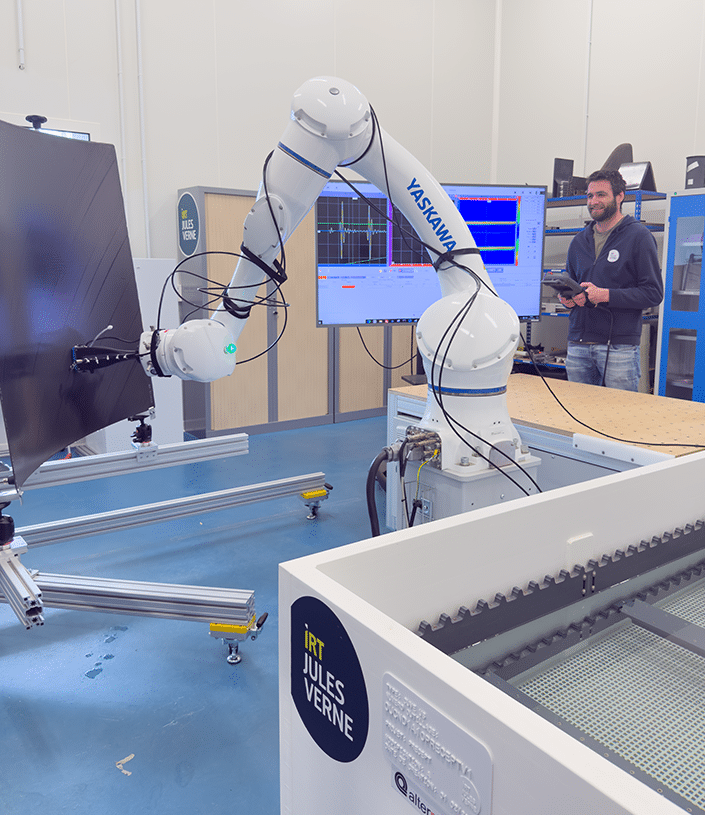
Monitoring & process control
Develop non-destructive testing of critical parts and monitor manufacturing processes to reduce production costs.
To reduce inspection costs, IRT Jules Verne develops innovative technologies in process monitoring (PHM), non-destructive testing (NDT) and integrated health control (SHM) at its premises in Nantes.
The team also offers the digital tools essential for the automatic real-time analysis of the data collected, in particular by using artificial intelligence to predict the quality of parts, provide feedback on processes, assist the operator in his diagnosis and ensure the digital continuity of all operations in the production range. The solutions developed are then deployed in production and maintenance in the aeronautics, naval, energy and transport sectors.
Led by Nicolas Terrien since 2022, the team is made up of around fifteen experienced experts, PhDs, engineers and R&D technicians and uses cutting-edge technological platforms to carry out its research work.
- Monitoring of manufacturing processes
- Automated and flexible non-destructive testing
- Automatic analysis of inspection and monitoring data
- Integrated health monitoring of structures
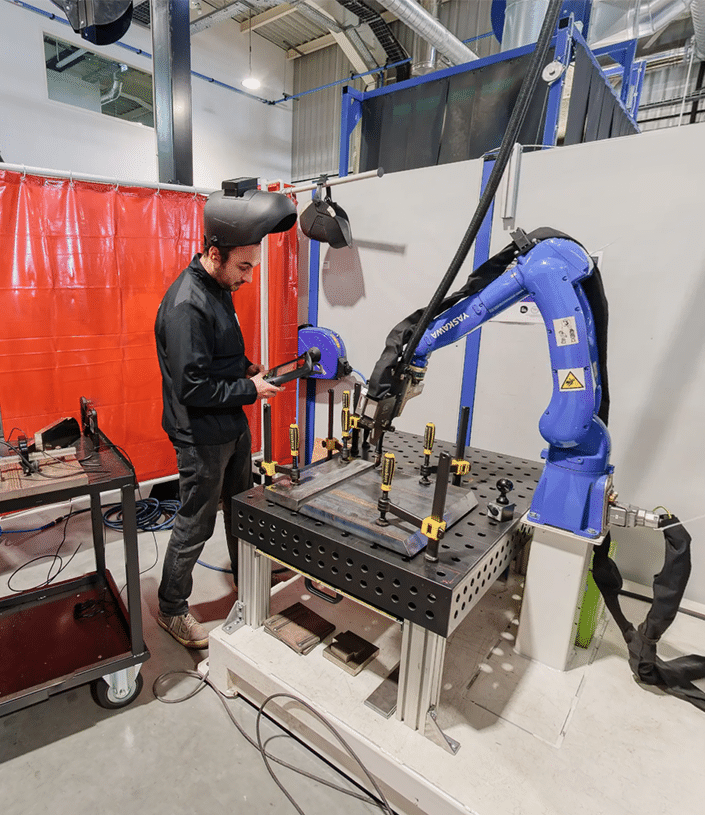
Robotics & Cobotics
The flexible and smart industry is taking shape in Nantes, at IRT Jules Verne. Since 2012, our technology team specializing in industrial robotics and cobotics has been developing solutions tailored to the production challenges faced by French manufacturers. These innovations take shape through national and European collaborative research projects and research services.
Our goal: to automate composite and metalworking processes and optimize the deployment of robots in complex industrial environments.
Comprising some twenty experts, engineers, technicians, and doctoral students, the team is led by Sébastien Rubrecht and has access to cutting-edge, proprietary resources, delivering robust and flexible robotic and cobotic solutions. These solutions are designed for rapid industrialization and address the challenges of flexibility, performance, precision, and ergonomics.
At IRT Jules Verne, R&D in robotics and cobotics works in synergy with the institute’s other areas of technological expertise, which specialize in metalworking processes, composite processes, simulation, and process monitoring.
- Automation of composite and metal fabrication processes
- Automated programming
- Precision compliant robotics
- Vision-based control
- Parallel cable robotics
- Localization & navigation of collaborative mobile robots
- Digital factory: diagnostics and optimization of production flows