
- A technology research institute dedicated to manufacturing -
Accelerating innovation and technology transfer to ensure a competitive, self-reliant and resilient industry
- 100+ manufacturers supported
- 4000 m² Industrial-scale technology halls
- 15 years of experience
- 150+ Collaborative projects worth €300 million
- 100+ Engineers, experts, technicians and R&D PhD students





















IRT Jules Verne, the manufacturing specialist: industrial processes and cross-disciplinary expertise
Composites
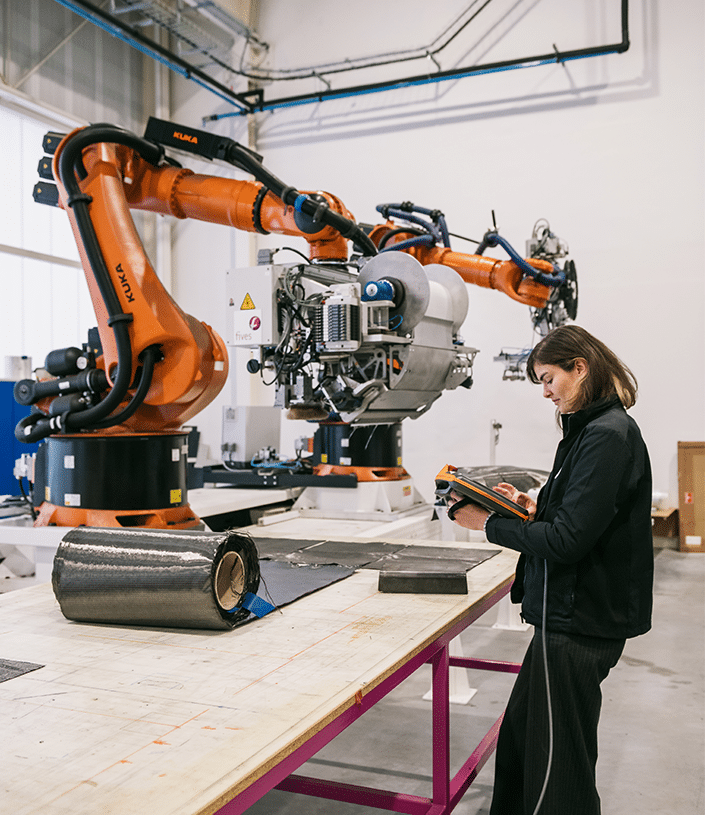
Based near Nantes, the IRT Jules Verne has, since its creation in 2012, developed outstanding expertise in the manufacturing processes for composite parts and structures.
As the core activity that led to its creation, the institute’s expertise in composite materials processes is now recognised at both national and European levels. IRT Jules Verne is also recognised as a key player in the field within international networks, notably JEC World, which has on several occasions recognised the groundbreaking technological innovations developed at the institute.
With a multi-sector technological research team dedicated to composite materials and processes, IRT Jules Verne leads collaborative national and European R&D projects and provides R&D services to address industrial performance challenges, particularly those relating to the manufacture of complex and large-scale structures.
The R&D activities combine the development of innovative processes with product design in order to optimise production costs, meet production rate targets and reduce environmental impact. They cover thermoplastic and thermosetting composite materials, from preforming and shaping through to assembly.
Linking up with IRT Jules Verne’s expertise in modelling and simulation, robotics and process monitoring, the team develops comprehensive solutions, from technical and economic feasibility studies through to full-scale industrial demonstrators.
- Large-scale automated preforming
- Liquid impregnation processes: thick infusion, RTM injection and isothermal CRTM
- Forming processes: thermocompression, stamping/overmolding and non-autoclave consolidation
- Welding of TP composites
Metallic
Metal welding & additive manufacturing
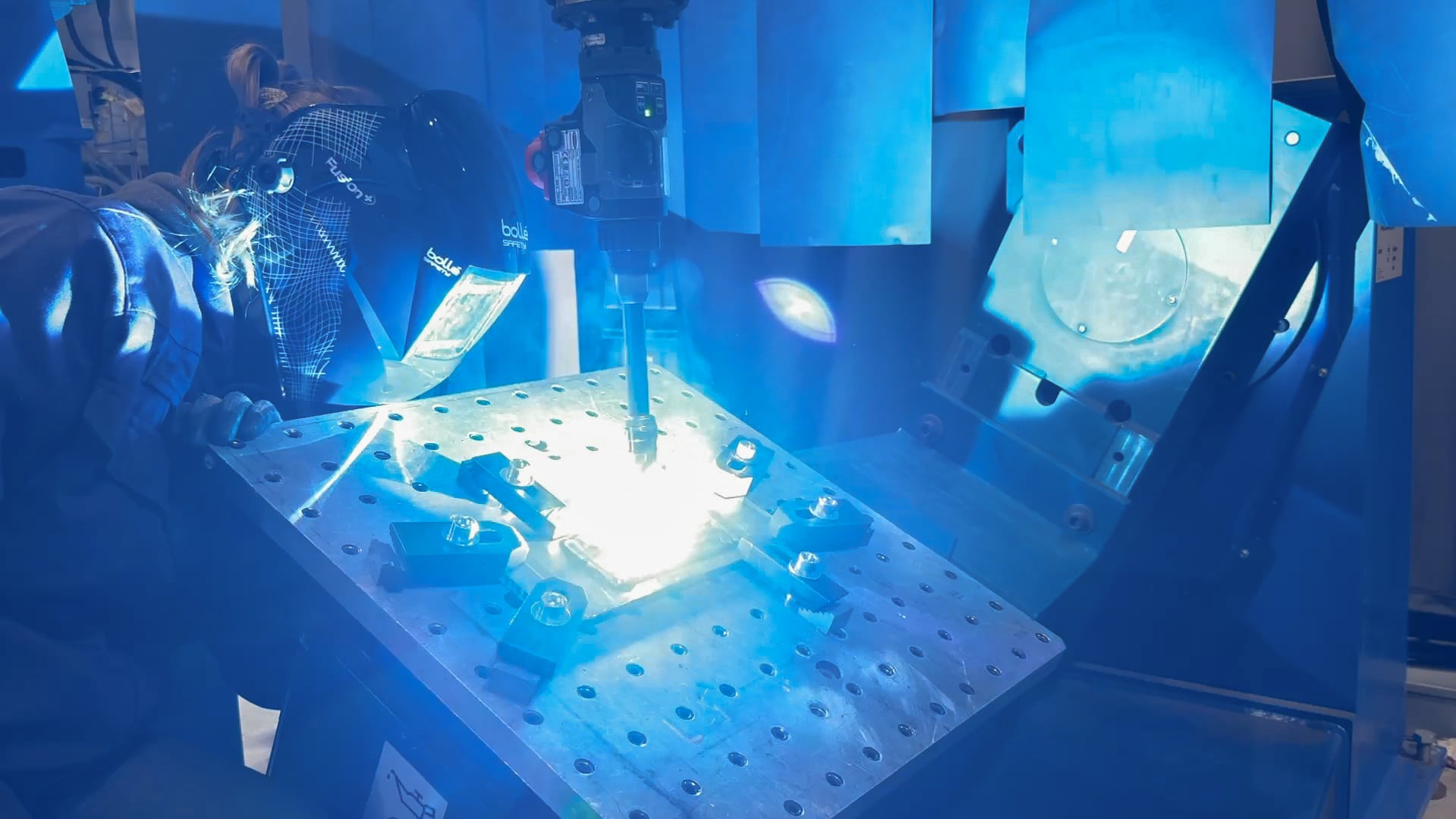
Innovative metal processes are one of the pillars of the technological research carried out at the IRT Jules Verne (Nantes) since 2012. The objective is twofold: to industrialize additive manufacturing technologies (DED-fil and AFSD) and to automate welding assembly (Arc and FSW) by improving productivity and quality.
Supervised by Grégoire Bazin, our technological research team is made up of about fifteen R&D engineers, experts, technicians and PhD students. It develops innovations for metal manufacturing processes based on additive manufacturing and metal welding technologies in liquid and solid state.
The team relies on know-how in metal processes and materials and on state-of-the-art equipment that differentiates it. It works in synergy with the other research teams of the IRT Jules Verne in order to offer global support.
- Automated Metal Welding Assembly
- Large-Scale Metal Additive Manufacturing Using DED Wire (Liquid State)
- AFSD Large-Scale Metal Additive Manufacturing (Solid-State)
- Repair and Reloading
Modelling & Simulation
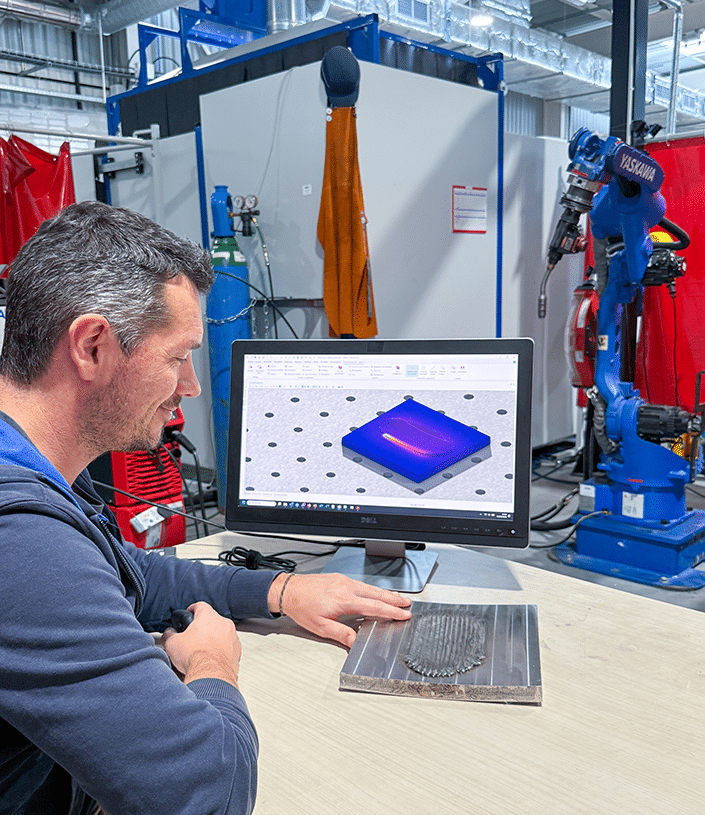
To enhance the competitiveness of the industrial sector, IRT Jules Verne relies on modeling and numerical simulation of manufacturing processes to address the major challenges facing French industry. Based in Nantes since 2012, the Modelling and Simulation team studies the behavior of structures and manufacturing processes and works on the shaping and assembly of materials. It uses and develops digital tools for its R&D projects and services to size, predict, optimize, and understand.
The objective is clear: to provide reliable data to manufacturers to facilitate decision-making and reduce the time and cost of development.
Led by Stéphanie Colliou, the team consists of 18 R&D engineers, experts, and doctoral students. It has a strong digital culture and is proficient in a wide range of simulation software. Working in collaboration with the institute’s other technological expertise areas, the simulation and modeling work is validated through testing. The team relies on a network of partners to characterize materials and feed data into the models.
- Simulation and optimisation of composite processes
- Simulation and optimisation of metallic processes
- Digital twin of the process
- Assembly and tolerancing
- Thermal management of processes
Monitoring & process control
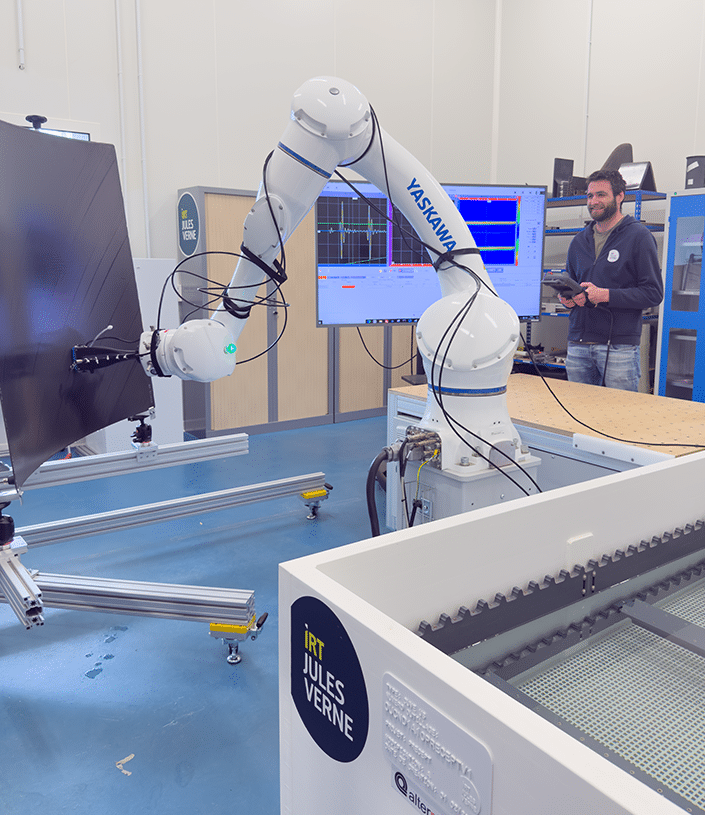
Develop non-destructive testing of critical parts and monitor manufacturing processes to reduce production costs.
To reduce inspection costs, IRT Jules Verne develops innovative technologies in process monitoring (PHM), non-destructive testing (NDT) and integrated health control (SHM) at its premises in Nantes.
The team also offers the digital tools essential for the automatic real-time analysis of the data collected, in particular by using artificial intelligence to predict the quality of parts, provide feedback on processes, assist the operator in his diagnosis and ensure the digital continuity of all operations in the production range. The solutions developed are then deployed in production and maintenance in the aeronautics, naval, energy and transport sectors.
Led by Nicolas Terrien since 2022, the team is made up of around fifteen experienced experts, PhDs, engineers and R&D technicians and uses cutting-edge technological platforms to carry out its research work.
- Monitoring of manufacturing processes
- Automated and flexible non-destructive testing
- Automatic analysis of inspection and monitoring data
- Integrated health monitoring of structures
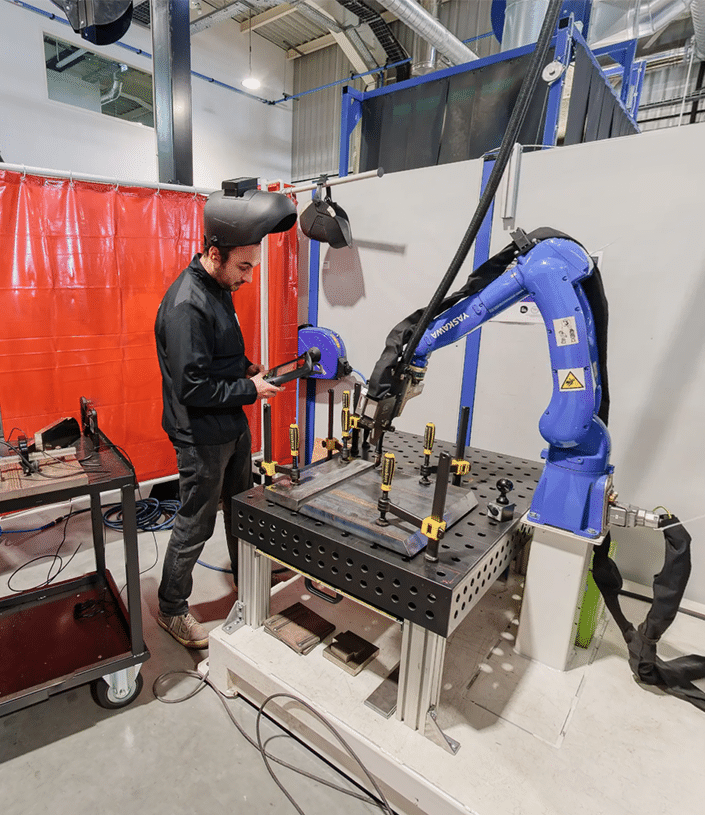
Robotics & Cobotics
The flexible and smart industry is taking shape in Nantes, at IRT Jules Verne. Since 2012, our technology team specializing in industrial robotics and cobotics has been developing solutions tailored to the production challenges faced by French manufacturers. These innovations take shape through national and European collaborative research projects and research services.
Our goal: to automate composite and metalworking processes and optimize the deployment of robots in complex industrial environments.
Comprising some twenty experts, engineers, technicians, and doctoral students, the team is led by Sébastien Rubrecht and has access to cutting-edge, proprietary resources, delivering robust and flexible robotic and cobotic solutions. These solutions are designed for rapid industrialization and address the challenges of flexibility, performance, precision, and ergonomics.
At IRT Jules Verne, R&D in robotics and cobotics works in synergy with the institute’s other areas of technological expertise, which specialize in metalworking processes, composite processes, simulation, and process monitoring.
- Automation of composite and metal fabrication processes
- Automated programming
- Precision compliant robotics
- Vision-based control
- Parallel cable robotics
- Localization & navigation of collaborative mobile robots
- Digital factory: diagnostics and optimization of production flows
Technological challenges aligned with your competitiveness challenges
- 01 Performance Improve the performance of manufacturing processes, reduce production and maintenance costs, and better control the quality of parts. Find out more about this challenge
- 02 Flexibility Develop automated, flexible, agile and reconfigurable processes and optimize the deployment of robots in a complex industrial environment. Find out more about this challenge
- 03 Transitions Limit the environmental impact of manufacturing processes and reduce the time and cost of developing manufacturing processes through simulation. Find out more about this challenge
Six strategic sectors at the heart of our action
 Sector – 01 / 06
01
Aeronautics
Aéronautique
Sector – 01 / 06
01
Aeronautics
Aéronautique
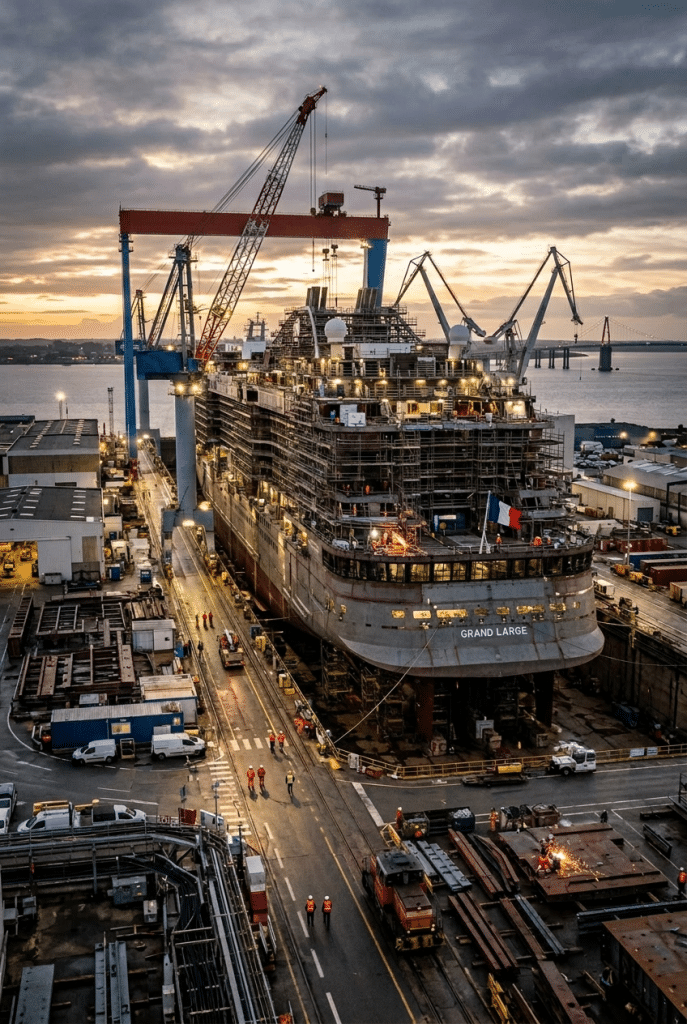 Sector – 02 / 06
02
Shipbuilding
reduction of manufacturing costs and times, need for skills, robotization of critical operations, working conditions and attractiveness
Shipbuilding
Sector – 02 / 06
02
Shipbuilding
reduction of manufacturing costs and times, need for skills, robotization of critical operations, working conditions and attractiveness
Shipbuilding
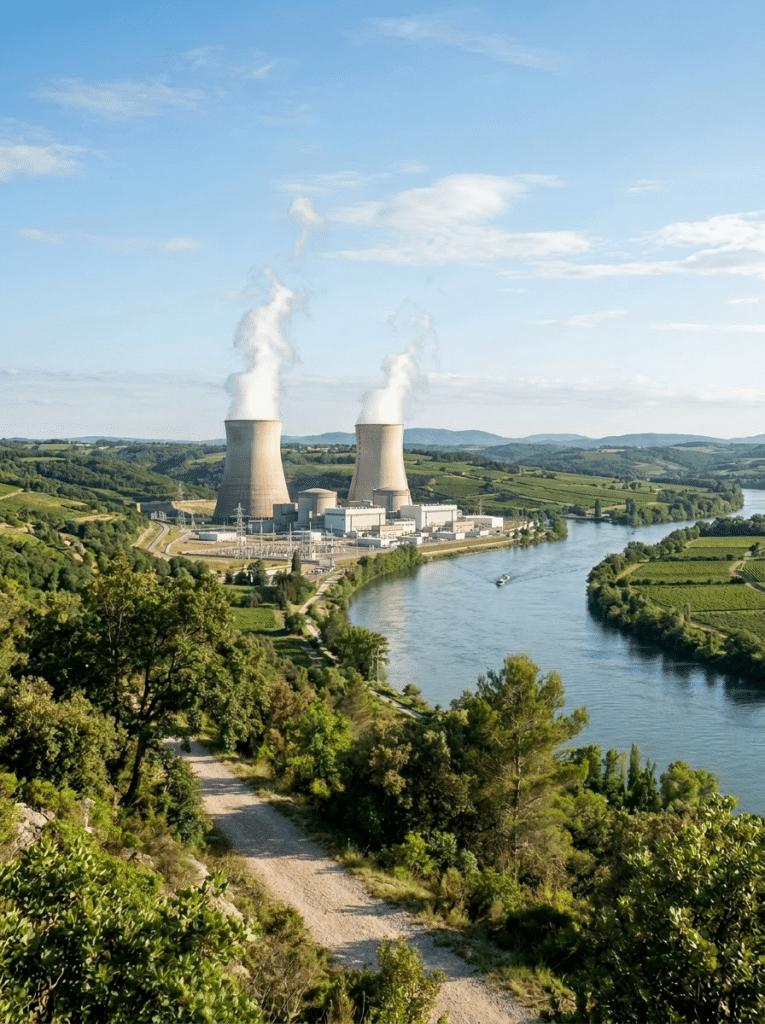 Sector – 03 / 06
03
Energy
wind, nuclear, decommissioning, extreme conditions, radioactive waste management
Energy
Sector – 03 / 06
03
Energy
wind, nuclear, decommissioning, extreme conditions, radioactive waste management
Energy
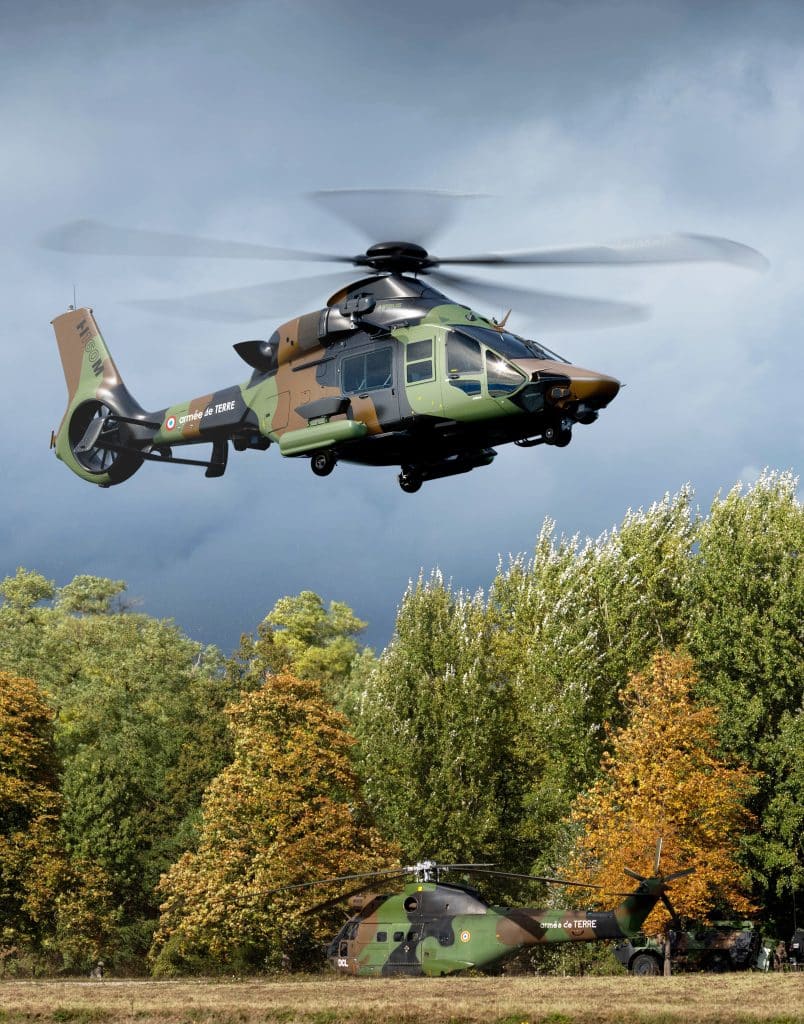 Sector – 04 / 06
04
Defence
industrial sovereignty, technological competitiveness, confidentiality, ramp-up, production capacity, automation and digitalisation
Defence
Sector – 04 / 06
04
Defence
industrial sovereignty, technological competitiveness, confidentiality, ramp-up, production capacity, automation and digitalisation
Defence
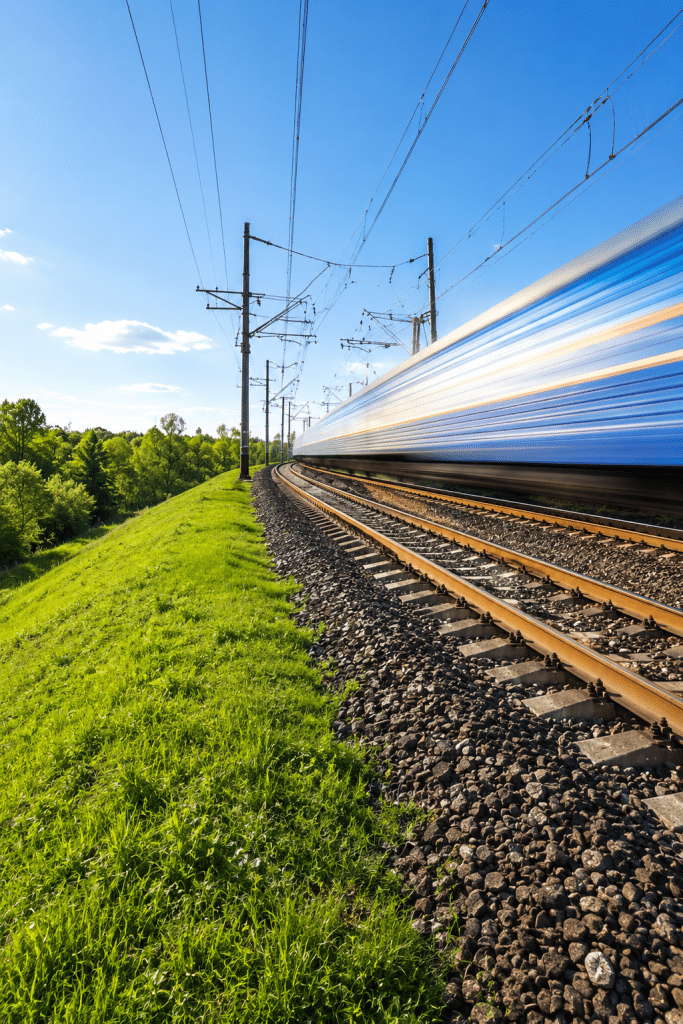 Sector – 05 / 06
05
Rail
modernisation of the network, flexibility of factories, decarbonised and repairable trains, French industrial competitiveness
Rail
Sector – 05 / 06
05
Rail
modernisation of the network, flexibility of factories, decarbonised and repairable trains, French industrial competitiveness
Rail
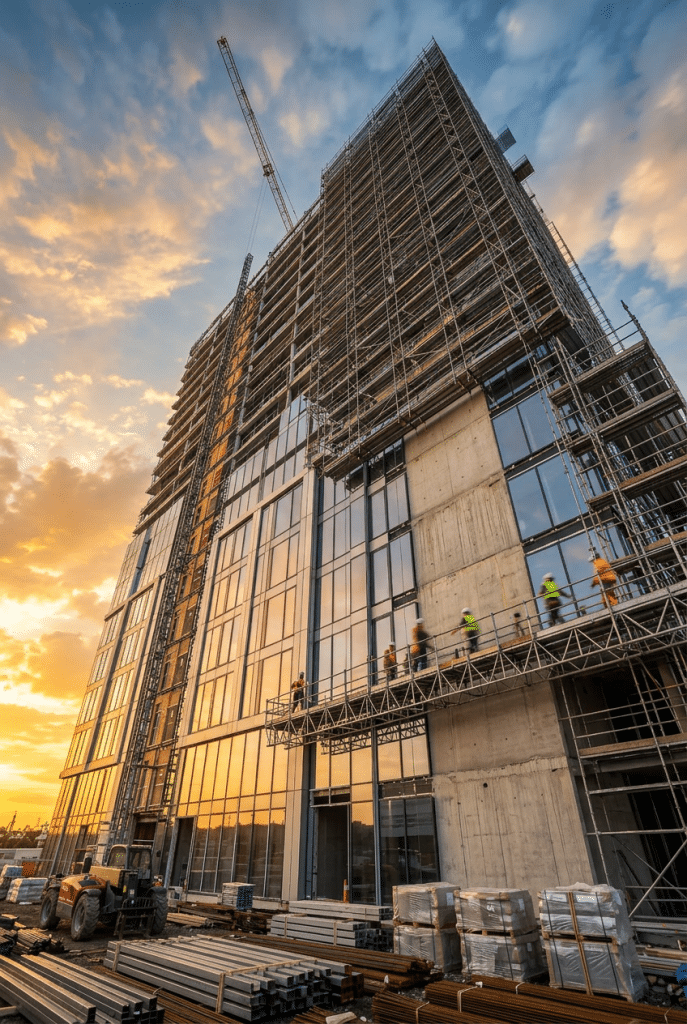 Sector – 06 / 06
06
Construction
low-carbon construction, energy renovation, off-site construction, digitization of construction sites, skills and productivity.
Construction
Sector – 06 / 06
06
Construction
low-carbon construction, energy renovation, off-site construction, digitization of construction sites, skills and productivity.
Construction
- 01 Aeronautics ramping up production, cost control, safety and quality of parts, lightening of structures
- 02 Shipbuilding reduction of manufacturing costs and times, need for skills, robotization of critical operations, working conditions and attractiveness
- 03 Energy wind, nuclear, decommissioning, extreme conditions, radioactive waste management
- 04 Defence industrial sovereignty, technological competitiveness, confidentiality, ramp-up, production capacity, automation and digitalisation
- 05 Rail modernisation of the network, flexibility of factories, decarbonised and repairable trains, French industrial competitiveness
- 06 Construction low-carbon construction, energy renovation, off-site construction, digitization of construction sites, skills and productivity.
Five types of collaboration adapted to your industrial challenges
- 01 France 2030 Projects Co-construct and lead collaborative R&D projects to collectively advance multi-sector technological research in the field of manufacturing, based on the leverage effect of France 2030 public funding. NATIONAL COLLABORATIVE R&D
- 02 R&D Services Quickly and efficiently mobilize the potential of innovative manufacturing technologies in the face of a manufacturer's specific needs. TAILOR-MADE & EXCLUSIVE MISSION
- 03 European calls for projects To develop, set up and manage European R&D projects aligned with the needs of our French industrial partners. LOBBYING, ANALYSIS, ASSEMBLY, MANAGEMENT, COORDINATION EU
- 04 National calls for projects Identify and respond effectively to strategic and promising national calls for projects for French manufacturing processes. MONITORING, RESPONSE AND PROJECT MANAGEMENT
- 05 Training Train your industrial and academic teams in innovative manufacturing technologies and the management of innovative and complex projects. INTER AND INTRA-COMPANY, QUALIOPI CERTIFICATION
- NOT SURE WHICH SUPPORT TO CHOOSE? Our team listens to you and guides you towards the right collaboration format according to your R&D challenges. Be contacted
Three flagship projects that are shaping the factory of tomorrow
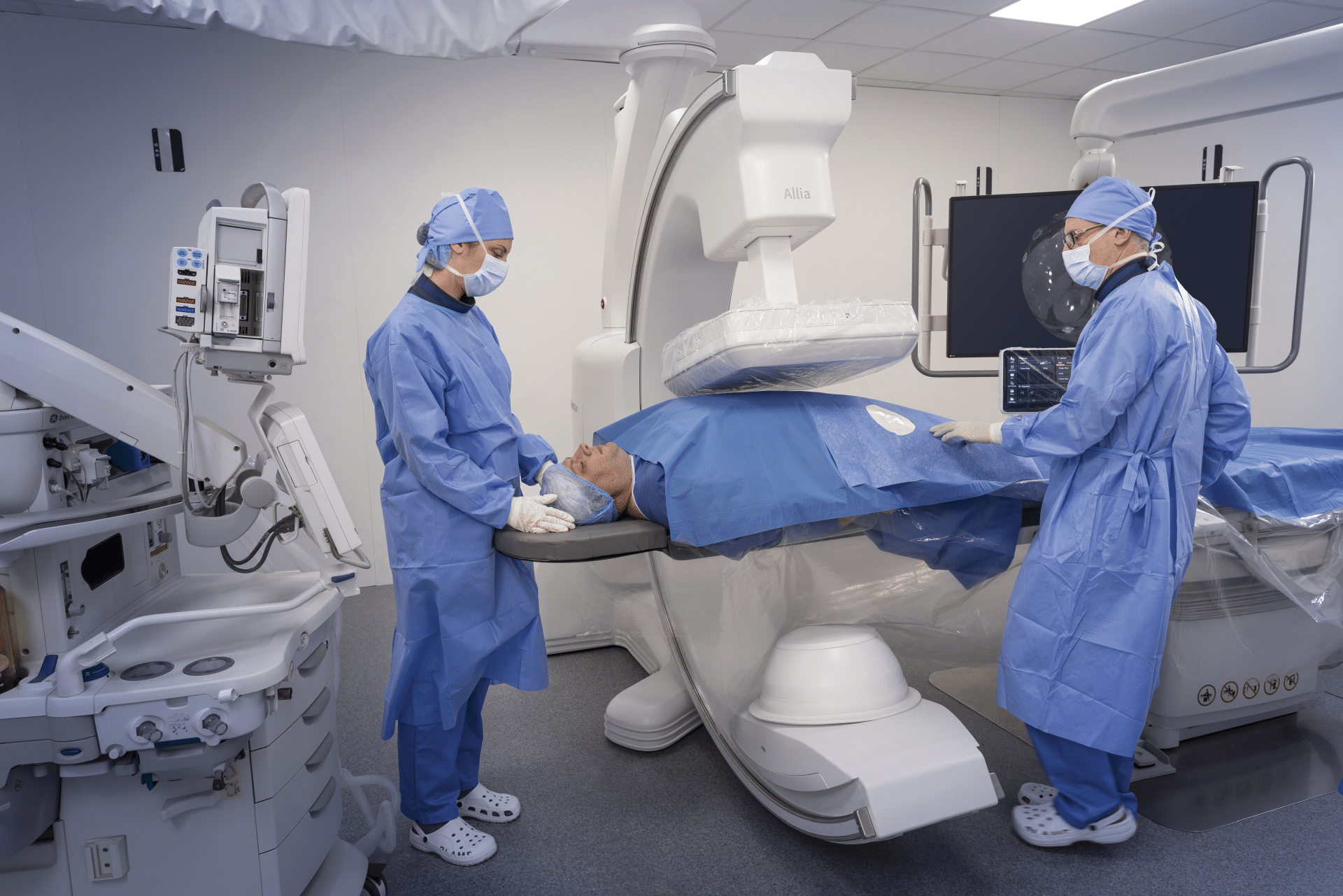 Industrializing a compact and mobile C-arm for interventional imaging
Allia™ Moveo illustrates the transition from an applied research challenge to a medical platform for the global market, thanks to a large-diameter, mobile composite C-arm with no visible cables.
Read the case study
Industrializing a compact and mobile C-arm for interventional imaging
Allia™ Moveo illustrates the transition from an applied research challenge to a medical platform for the global market, thanks to a large-diameter, mobile composite C-arm with no visible cables.
Read the case study
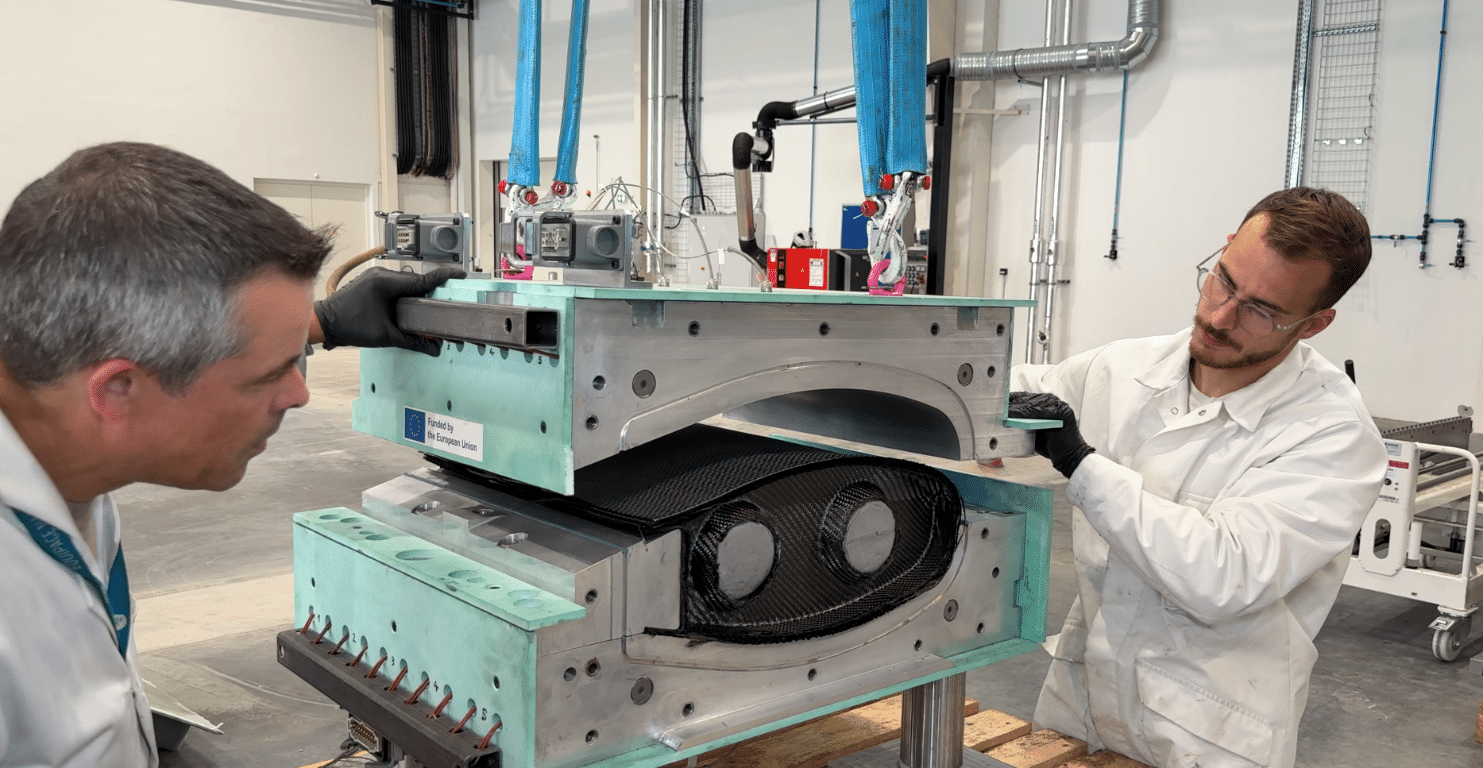 Reducing the environmental footprint of composites with bio-based and recycled materials
The European project SUSPENS has developed bio-based resins, recycled fibres and more sober manufacturing processes to design sustainable composites for the automotive, nautical and aeronautics industries.
Read the case study
Reducing the environmental footprint of composites with bio-based and recycled materials
The European project SUSPENS has developed bio-based resins, recycled fibres and more sober manufacturing processes to design sustainable composites for the automotive, nautical and aeronautics industries.
Read the case study
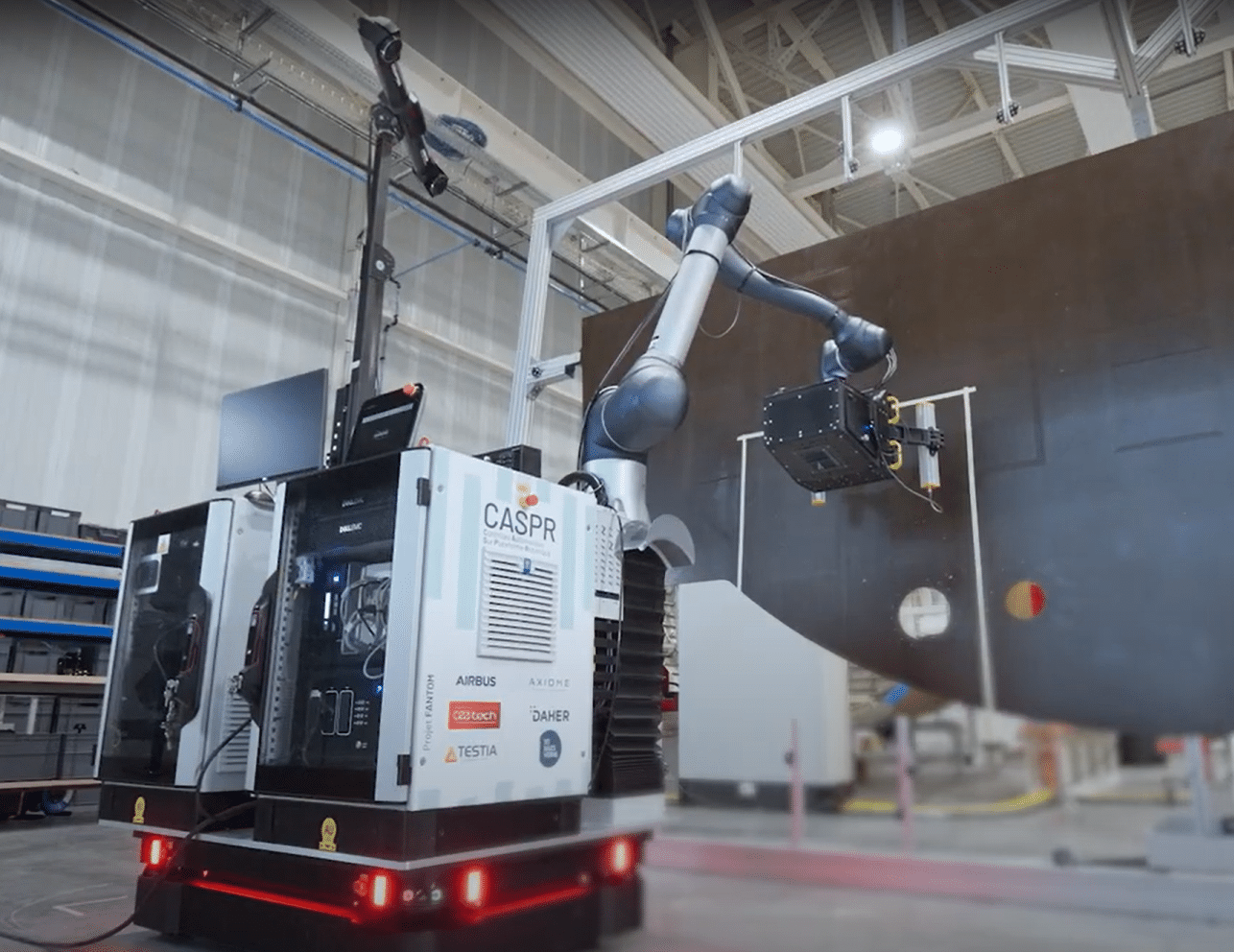 Automating the non-destructive testing of composite parts with an intelligent robotic platform
The FANTOM project is developing a flexible and automated non-destructive testing platform to make the inspection of composite parts more reliable and to support the digital continuity of production lines.
Read the case study
Automating the non-destructive testing of composite parts with an intelligent robotic platform
The FANTOM project is developing a flexible and automated non-destructive testing platform to make the inspection of composite parts more reliable and to support the digital continuity of production lines.
Read the case study
The technological research institute dedicated to manufacturing
Our mission: to accelerate innovation and technology transfer to factories.
Our vocation: to strengthen French industrial competitiveness, sovereignty and resilience.
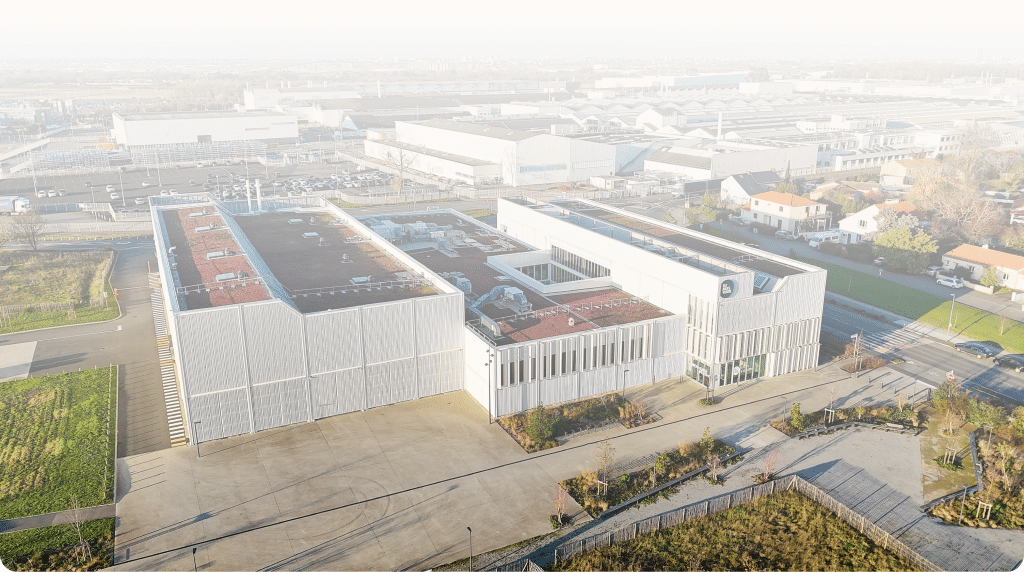
Currently at IRT Jules Verne
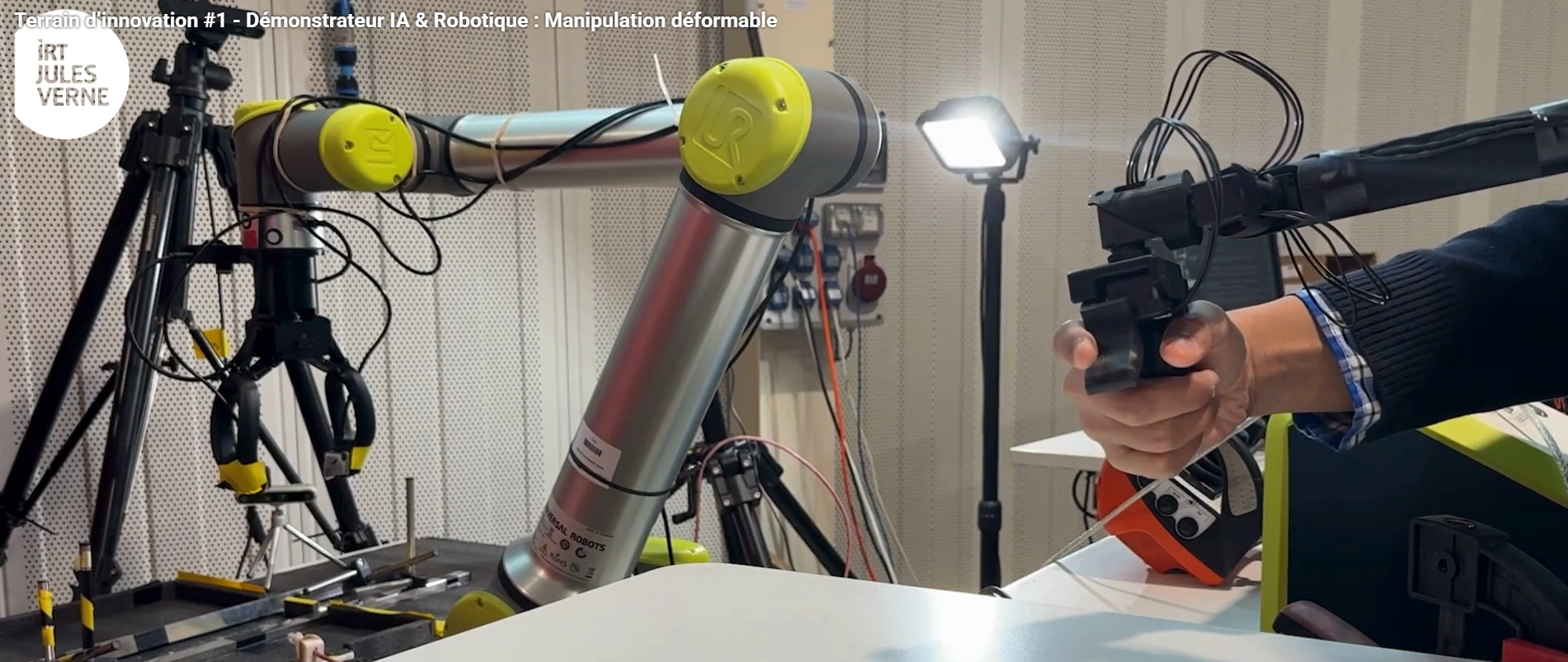
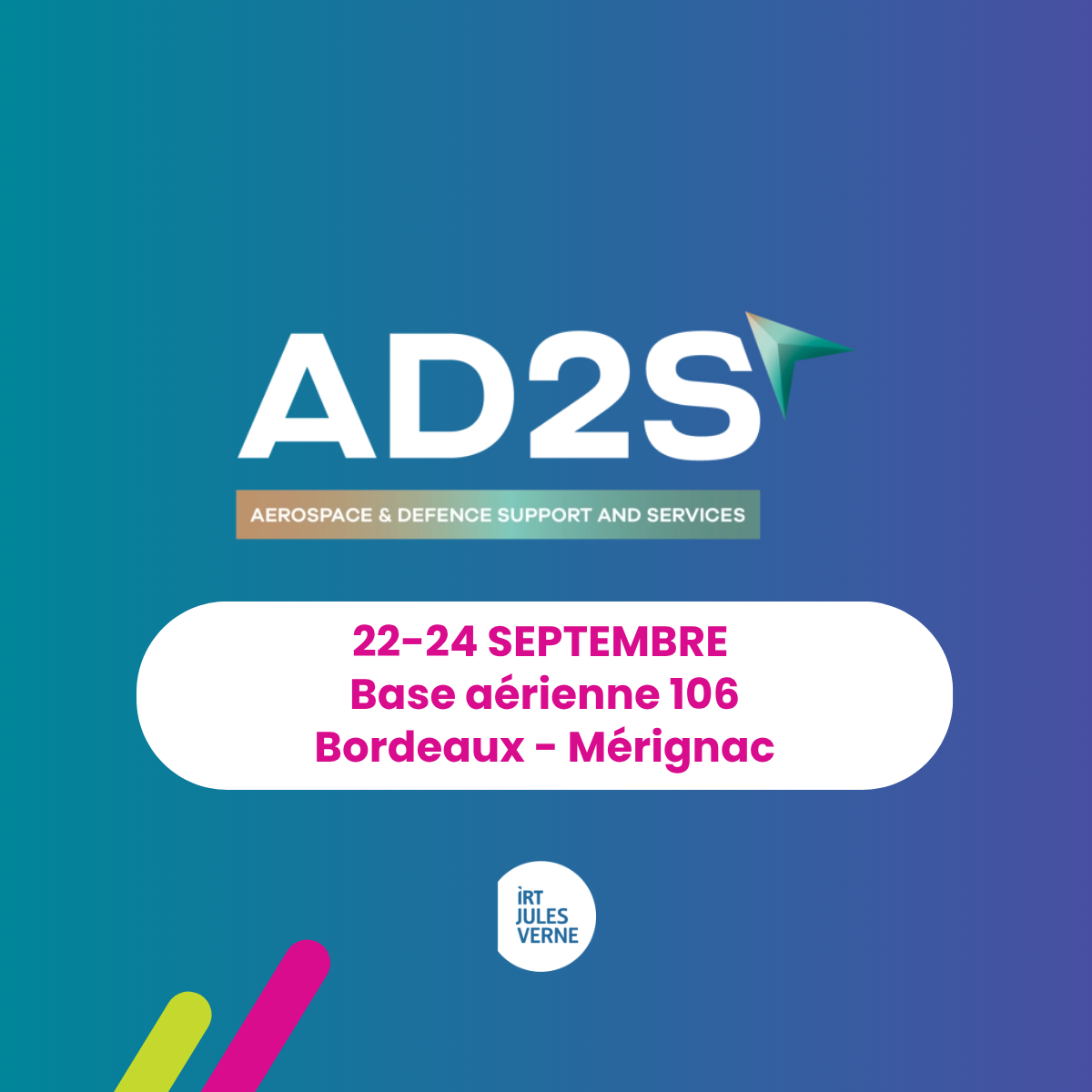 IRT Jules Verne will be attending the AD2S event, which focuses on support and services for the defence aerospace sector
11 September 2026
Read more
IRT Jules Verne will be attending the AD2S event, which focuses on support and services for the defence aerospace sector
11 September 2026
Read more
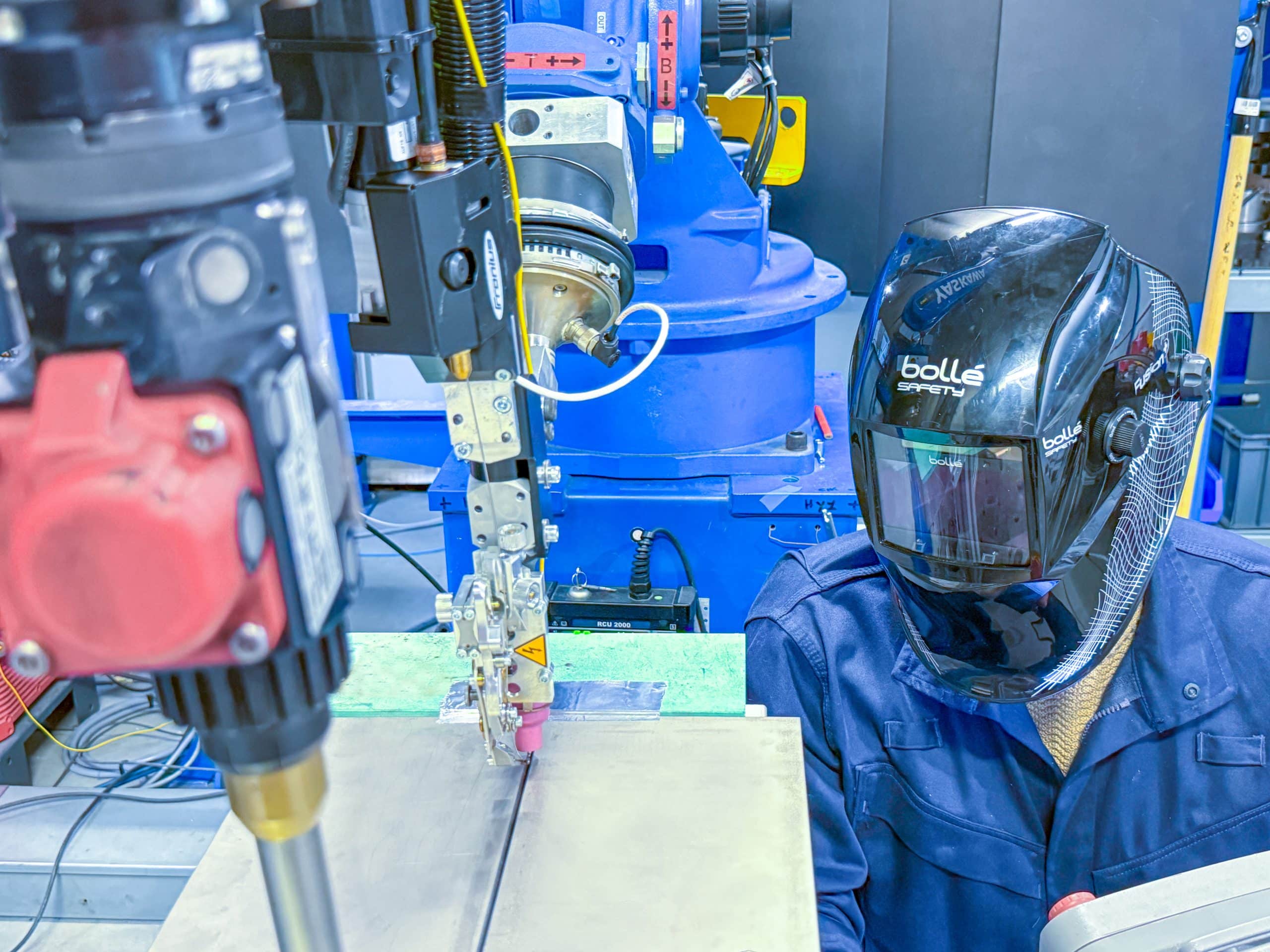 Prototype your metal parts quickly on our industrial platforms
13 July 2026
Read more
Prototype your metal parts quickly on our industrial platforms
13 July 2026
Read more